
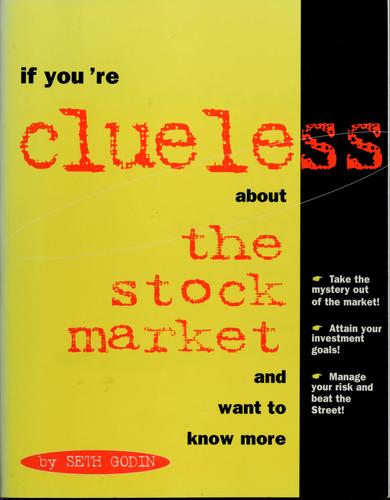
If you're clueless about the stock market and want to know more

Curated by Brian Kim, CPA — every pick gets a plain-English summary and the key takeaways.
Brian Kim, CPA · 2.89M YouTube Subscribers →What this book actually teaches
- 01Stock market basics — what shares are, how exchanges function, what indexes measure — are genuinely learnable by non-specialists, and avoidance is the more expensive choice.
- 02The book introduces the vocabulary of market participation (common vs. preferred stock, dividends, mutual funds) at a level accessible to a first-time reader.
- 03Published in 1997, specific advice on brokers, fees, and investment products is substantially outdated and should not be relied on.
- 04The index fund revolution post-1997 has shifted conventional wisdom significantly; the book's framing of active stock-picking as a reasonable retail strategy now reads as pre-consensus.
- 05For historical context on retail investor education before the internet transformed financial access, the book has modest documentary interest.
What's in this book
Published in 1997 under Seth Godin's editorial imprint, this book targets readers who have no prior stock market knowledge and want a starting framework before engaging with more substantive sources. The core argument is that the stock market is understandable to ordinary people who are willing to learn the vocabulary and basic mechanics — and that being intimidated into avoidance is more costly over time than the learning curve of engagement.
The book covers the standard introductory topics: what stocks are and why companies issue them, how exchanges work, how to read a stock table, the difference between common and preferred shares, what dividends represent, how mutual funds and index funds differ from individual stocks, and the basics of brokerage accounts. It also touches on market indicators — the Dow, S&P 500 — and how to interpret them without treating them as precise predictors.
The Clueless series format, like the Idiot's Guides competitor, uses short chapters, plain definitions, and a reassuring tone. The target is not someone building a trading system but someone who wants to understand what their employer's 401k plan is actually doing or why financial news mentions the Nasdaq every morning.
The weaknesses are considerable and primarily a function of age. This book was published at the peak of the dot-com bull market, before the 2000 crash, before the 2008 financial crisis, before index fund investing became the dominant retail recommendation, before robo-advisors existed, and before the rise of zero-commission retail brokerage. Any specific tactical advice — how to pick a broker, what a good expense ratio looks like — is badly dated. The 1997 framing of online investing as a novelty reads strangely today when most investors have never used a phone-based broker.
As a historical artifact, the book is mildly interesting for showing what retail financial education looked like before the passive investing consensus. As a practical guide, it has been superseded entirely by free online resources, current editions of similar books, and a generation of financial content creators who work in the actual market environment of today. The ClearValue Books would not recommend this as a primary source for any reader in 2024 or later.
Read next

For anyone who wants to invest seriously without becoming a day-trader — beginners willing to read carefully, and exp…
Buy on Amazon →
Early- and mid-career W-2 employees who want a single, executable wealth-building plan without becoming amateur portf…
Buy on Amazon →
For individual long-term investors who can hold concentrated positions for five to twenty years and want a framework…
Buy on Amazon →
For experienced investors who are comfortable with DCF mechanics and want a more disciplined, market-price-anchored f…
Buy on Amazon →About Seth Godin
Read more from Seth Godin and explore the full bibliography on ClearValue Books.
View Seth Godin's page →Get an email if our take on If you're clueless about the stock market and want to know more changes.
We re-review our picks. We'll email you if If you're clueless about the stock market and want to know more's ranking or review changes — no checking back.

Ready to read If you're clueless about the stock market and want to know more?
Buy the edition we recommend on Amazon.
Buy on Amazon →