
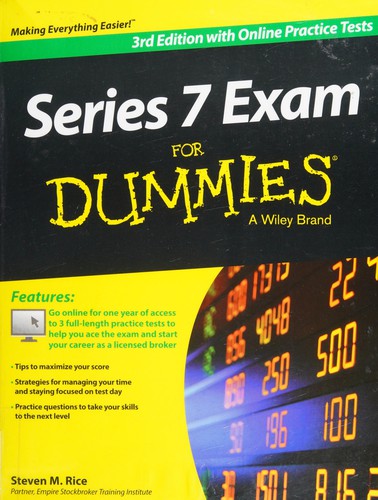
Series 7 exam for dummies

Curated by Brian Kim, CPA — every pick gets a plain-English summary and the key takeaways.
Brian Kim, CPA · 2.89M YouTube Subscribers →What this book actually teaches
- 01Content is organized to mirror the FINRA exam domain structure and weighting rather than building a conceptual understanding of markets — appropriate for test prep, not for developing lasting investment knowledge.
- 02The options material — consistently the hardest section of the Series 7 — receives proportionate coverage, with enough worked examples that candidates can follow the logic rather than just memorize answer patterns.
- 03Practice questions are embedded throughout each chapter and in a full end-of-book test, and they match actual FINRA exam style and difficulty closely enough to serve as meaningful calibration.
- 04The 2012 publication date means suitability, know-your-customer, and compliance content does not reflect post-Reg BI regulatory changes; candidates should supplement with current FINRA materials for those sections.
- 05The For Dummies format is optimized for retention and test performance, not depth — candidates wanting to understand underlying market mechanics beyond what the exam requires will need additional resources.
What's in this book
Series 7 Exam for Dummies by Steven M. Rice (2012) is a structured study guide for candidates preparing for the General Securities Representative Examination, the licensing test administered by FINRA that most aspiring stockbrokers and securities sales professionals must pass. The exam covers a wide and specific range of topics — equity and debt securities, options, municipal bonds, investment company products, margin accounts, tax rules, and customer account regulations — and Rice's book is organized to map directly onto that content structure rather than build a conceptual foundation for understanding markets.
The core of the book is its coverage of the exam's content domains in the sequence FINRA weights them. Rice explains the mechanics of equity securities (common and preferred stock characteristics, rights offerings, ADRs), debt instruments (bond pricing, yield calculations, the relationship between price and yield, call provisions), and options (calls, puts, straddles, spreads, and the mechanics of premium calculation). The options material, which candidates consistently identify as the hardest section of the exam, receives proportionate attention. Rice works through the standard options strategies with enough examples that the logic — not just the memorized answer — becomes accessible.
The For Dummies format means the book leans on memory aids, margin callouts, and practice question sets embedded throughout each chapter. These are appropriate for exam prep but can make the material feel mechanical rather than conceptual. Rice is explicit that the goal is passing the exam, not developing a full understanding of market structure, and the book is calibrated accordingly. Readers who want to understand why a margin account works the way it does at a deeper level will need to supplement with additional material.
Practice questions are distributed throughout and in a full practice test format at the end. The quality of the questions is generally good — they match the style and difficulty of actual FINRA exam questions closely enough to be useful for calibration — though the 2012 publication date means some regulatory and product details may not reflect current FINRA rules, particularly around options and mutual fund disclosure requirements that have evolved since publication.
The weaknesses are predictable for the genre. Some topics that carry relatively low exam weight receive more page space than warranted, while the suitability and know-your-customer rules — which FINRA has expanded significantly since 2012 — are covered at the pre-Reg BI regulatory baseline. Candidates sitting for the exam today should supplement with current FINRA study materials for any compliance and customer interaction content.
For Series 7 candidates who learn best from structured chapter-by-chapter review with embedded practice questions, this book provides a reliable framework for the core content. It works best as a primary study guide paired with current FINRA regulatory updates rather than as a standalone preparation resource.
Read next

For anyone who wants to invest seriously without becoming a day-trader — beginners willing to read carefully, and exp…
Buy on Amazon →
Early- and mid-career W-2 employees who want a single, executable wealth-building plan without becoming amateur portf…
Buy on Amazon →
For individual long-term investors who can hold concentrated positions for five to twenty years and want a framework…
Buy on Amazon →
For experienced investors who are comfortable with DCF mechanics and want a more disciplined, market-price-anchored f…
Buy on Amazon →About Steven M Rice
Read more from Steven M Rice and explore the full bibliography on ClearValue Books.
View Steven M Rice's page →Get an email if our take on Series 7 exam for dummies changes.
We re-review our picks. We'll email you if Series 7 exam for dummies's ranking or review changes — no checking back.

Ready to read Series 7 exam for dummies?
Buy the edition we recommend on Amazon.
Buy on Amazon →