How do I write a business plan?
In one paragraph
A business plan should include an executive summary, market analysis, description of the product or service, operational plan, management overview, and financial projections — structured to answer a single question: why will this business succeed?
What this actually means
Writing a business plan is less about filling in a template and more about forcing clarity on the assumptions that will determine whether a business survives. The document serves two audiences: external readers like lenders and investors, who need evidence of viability and a clear repayment or return path, and the founders themselves, who benefit from the discipline of committing assumptions to paper where they can be tested.
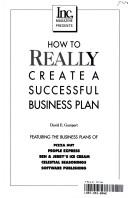
The most practical guide available is "Inc. Magazine Presents: How to Really Create a Successful Business Plan" by David Gumpert. Unlike academic frameworks, Gumpert's approach is grounded in what actually works when a plan is reviewed by someone with money at stake. He covers the common failure modes — vague market sizing, unsupported financial projections, and executive summaries that bury the lead — and offers concrete structural guidance for each section. The book is particularly strong on financial modeling: how to build projections that are credible without being falsely precise, and how to present break-even analysis and cash flow in a way that earns trust rather than skepticism.
For the proposal and pitch layer that accompanies a business plan — especially when approaching lenders, partners, or investors — "Perfect Phrases for Business Proposals and Business Plans" by Don Debelak provides a phrase-level reference for framing claims persuasively and professionally. It is not a strategy text, but it is a useful craft resource for writers who know what they want to say but struggle with how to say it credibly.
A common mistake is treating the business plan as a document rather than a process. The value is in the research and reasoning that produces it. Market sizing should be built up from real data, not assumed. Competitive analysis should name specific alternatives, not gesture vaguely at "the competition." Financial projections should be derived from unit economics, not top-down revenue estimates.
Most lenders focus on three things: cash flow adequacy, collateral, and the operator's track record. A business plan that addresses all three directly — and honestly — will outperform a polished document that evades the hard questions.