What is the best book on business financing?
In one paragraph
"The Business Owner's Guide to Financial Freedom" by Mark Kohler and Mat Sorensen is the most practical book on structuring business finances — covering entity selection, tax strategy, and capital planning in a way that directly supports long-term owner wealth.
What this actually means
Business financing is a broad topic that spans everything from how a company is legally structured, to how it accesses debt and equity capital, to how it manages cash flow to avoid the liquidity crises that kill otherwise viable businesses. Most books on the subject pick one slice. The best ones connect the dots.
"The Business Owner's Guide to Financial Freedom" by Mark Kohler and Mat Sorensen is the strongest integrated treatment available. Kohler is a tax attorney and CPA; Sorensen is a retirement account specialist. Together, they build a roadmap for how business owners can use the tax code, entity structure, and alternative assets to convert business income into lasting personal wealth. The book is direct about topics most business finance books avoid: why a sole proprietorship quietly destroys value compared to a properly structured LLC or S-Corp, how self-directed retirement accounts can hold business assets, and why most small business owners systematically overpay in taxes while underinvesting in their own balance sheets.
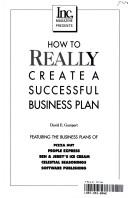
For owners who need to understand how external capital sources evaluate a business — banks, SBA lenders, and alternative lenders — "Inc. Magazine Presents: How to Really Create a Successful Business Plan" covers the financial documentation side of the financing conversation. Lenders do not just underwrite the business model; they underwrite the quality of the financial reporting and the operator's ability to explain their numbers. Owners who understand how their financials are read are better positioned in any financing conversation.
The foundational wealth-building context for business financing lives in "Rich Dad Poor Dad" by Robert Kiyosaki, which reframes financing as a tool for acquiring assets rather than funding operations. Kiyosaki's distinction between assets (things that put money in a pocket) and liabilities (things that take money out) is a useful first-principles lens for evaluating any financing decision.
The most common mistake in business financing is optimizing for access to capital rather than cost of capital. Faster and easier financing is almost always more expensive. Understanding the full cost of each option — including personal guarantee exposure, collateral liens, and opportunity cost of equity — is the starting point for any sound financing decision.