What is the best book on business valuation?
In one paragraph
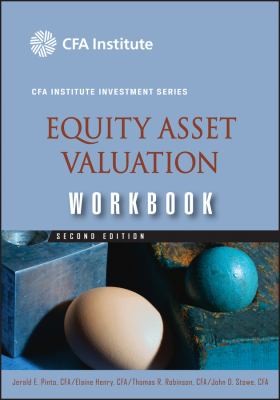
The Valuation Handbook is the practitioner-grade standard for business valuation methodologies — cost of capital, equity risk premiums, and industry-specific approaches. The Equity Asset Valuation Workbook by the CFA Institute pairs with it as a hands-on companion for working through real calculations.
What this actually means
Business valuation is simultaneously a financial discipline and an art form. The numbers require rigorous methodology; the assumptions that drive those numbers require judgment built from experience studying real businesses across cycles.
The Valuation Handbook (published by Duff & Phelps, now Kroll) is the reference text used by professional appraisers, M&A advisors, and expert witnesses. It provides empirically derived cost of capital inputs — equity risk premiums, size premiums, industry risk premiums — that are updated annually with current market data. For anyone valuing a private company, calculating a discount rate, or understanding how comparable public companies are priced, this is the foundational resource. It doesn't teach basic finance; it assumes practitioners already understand DCF and WACC, then provides the data and methodology to apply them rigorously.
The Equity Asset Valuation Workbook, a CFA Institute publication, bridges theory and practice. While the Valuation Handbook provides the inputs and standards, the workbook provides structured exercises for applying relative valuation (price-to-earnings, EV/EBITDA, price-to-book), intrinsic value models (dividend discount models, residual income models, free cash flow to equity), and residual income approaches. Working through the exercises builds the muscle memory that separates analysts who can explain valuation from those who can actually do it.
For context and judgment — understanding what makes one business worth a premium multiple over another — Common Stocks and Uncommon Profits by Philip Fisher remains the best complement. Fisher taught investors to look for qualitative competitive advantages that translate into durable earnings power, which is ultimately what drives valuation. The mechanics from the Valuation Handbook and CFA workbook; the judgment framework from Fisher.
Founders seeking a valuation for fundraising, sale, or estate planning benefit most from understanding the income approach (DCF), market approach (comparables), and asset approach (book value / adjusted net assets) — and knowing which method a buyer or investor will apply to their specific business type.