
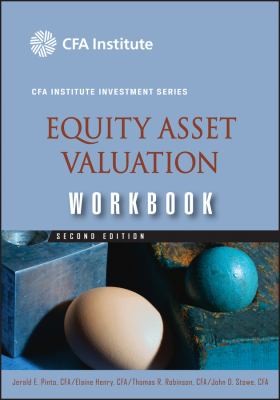
Equity Asset Valuation Workbook

Curated by Brian Kim, CPA — every pick gets a plain-English summary and the key takeaways.
Brian Kim, CPA · 2.89M YouTube Subscribers →What this book actually teaches
- 01Terminal value assumptions dominate DCF outputs in most real-world valuations — the workbook's exercises force precision on this point that abstract reading tends to gloss over.
- 02Dividend discount models, free cash flow models, and residual income models produce different values for the same company because they make different assumptions about what drives shareholder returns.
- 03Market multiples (P/E, EV/EBITDA, P/B) are only meaningful when compared to peers with similar growth profiles and capital structures — raw multiple comparisons without adjustment are a common analytical error.
- 04CFA-style valuation problems are intentionally designed with traps — changing assumptions mid-scenario, negative interim cash flows — that test whether the analyst understands the model or has memorized the formula.
- 05Industry-specific valuation methods (NAV for real estate, embedded value for insurance) reflect genuine differences in how value is created and distributed in those businesses.
What's in this book
The Equity Asset Valuation Workbook, published by the CFA Institute as a companion to the main Equity Asset Valuation text by Jerald Pinto and co-authors, is a practice volume rather than a primary reading. Its function is to reinforce the valuation frameworks covered in the main text through problems, solutions, and case studies. The workbook covers the full spectrum of equity valuation methods that CFA candidates and practitioners encounter: discounted cash flow models (including dividend discount models and free cash flow models), residual income valuation, market-based multiples (P/E, EV/EBITDA, price-to-book), and industry-specific valuation approaches.
The primary value of the workbook is in the problem sets. Each chapter presents scenario-based exercises that test whether the reader can apply a valuation model correctly — not just recite the formula, but adjust for edge cases like negative free cash flow, changing capital structure, or terminal value assumptions that dominate the intrinsic value estimate. The solutions are detailed enough to understand where errors occur in the calculation chain, which makes this a useful study companion.
The workbook is structured around the same learning outcome statements as the main CFA curriculum, which means it serves well as a final-review tool for candidates preparing for Level 2 or Level 3 examinations. For analysts who completed the CFA program years ago and want to refresh specific valuation mechanics, the workbook also works well as a targeted drill book.
Weaknesses stem from what the workbook is: it is a structured practice companion, not a standalone text. Readers without access to the main Equity Asset Valuation volume will find the workbook incomplete — the problems reference frameworks that are explained in the primary text, not here. The workbook also does not update for changes in market practice, such as how practitioners handle DCF inputs in sustained low-interest-rate or high-inflation environments. The clinical format — problem, then solution — limits the kind of conceptual discussion that turns mechanics into judgment.
This is the right tool for CFA candidates who learn best through application rather than reading and for analysts who want to stress-test their valuation mechanics. It is not a replacement for the main text and should not be purchased independently if the reader wants to understand valuation from the ground up.
Read next

For anyone who wants to invest seriously without becoming a day-trader — beginners willing to read carefully, and exp…
Buy on Amazon →
Early- and mid-career W-2 employees who want a single, executable wealth-building plan without becoming amateur portf…
Buy on Amazon →
For individual long-term investors who can hold concentrated positions for five to twenty years and want a framework…
Buy on Amazon →
For experienced investors who are comfortable with DCF mechanics and want a more disciplined, market-price-anchored f…
Buy on Amazon →About Thomas R Robinson
Read more from Thomas R Robinson and explore the full bibliography on ClearValue Books.
View Thomas R Robinson's page →Get an email if our take on Equity Asset Valuation Workbook changes.
We re-review our picks. We'll email you if Equity Asset Valuation Workbook's ranking or review changes — no checking back.

Ready to read Equity Asset Valuation Workbook?
Buy the edition we recommend on Amazon.
Buy on Amazon →