How do I build better money habits?
In one paragraph
Better money habits are built through automation, environment design, and values alignment — not willpower — and The Psychology of Money by Morgan Housel explains why behavioral change matters more than financial knowledge.
What this actually means
The financial advice industry has a structural problem: it produces knowledge when what people need is behavior change. Most adults who struggle financially can articulate basic financial principles — spend less than you earn, invest early, avoid high-interest debt — without acting on them. The gap between knowing and doing is a behavioral problem, not an information problem.
The Psychology of Money by Morgan Housel offers the most useful framework for understanding this gap. Housel argues that financial success is less about intelligence or access to information than about behavior — specifically, the ability to maintain consistent habits across time and market conditions. His case studies show that modest earners with consistent savings habits consistently outperform high earners with inconsistent ones.
The most reliable path to better money habits follows a consistent pattern across behavioral research. Automation is the most powerful tool available. Setting up automatic transfers to savings and investment accounts on payday removes the decision from the behavioral loop entirely — money moved before it is spent cannot be spent. People who automate savings consistently save more than people who save what is left over after spending, regardless of income level.
Environment design — arranging financial life so that good decisions are the path of least resistance — is the second pillar. This includes removing friction from saving (automatic contributions) while adding friction to spending (credit cards out of digital wallets, waiting periods before large purchases, unsubscribing from retail email lists).
Values alignment is the third element that most habit-formation advice ignores. Clever Girl Finance by Bola Sokunbi and You Are a Badass at Making Money by Jen Sincero both address how disconnects between stated values and actual spending create chronic financial guilt and inconsistency. When someone genuinely connects their financial behavior to outcomes they care about — financial independence, security for children, meaningful experiences — habit maintenance becomes easier because the motivation is internal rather than externally imposed.
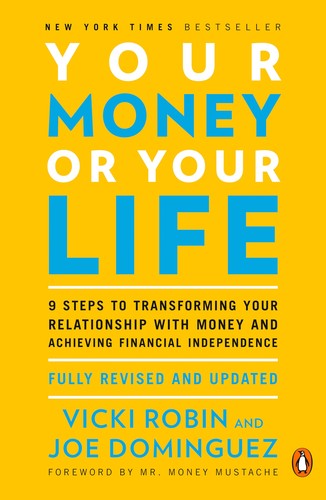
Your Money or Your Life by Vicki Robin adds a fourth frame: understanding money as life energy creates a natural brake on unnecessary spending without the moralizing that makes traditional frugality advice ineffective.