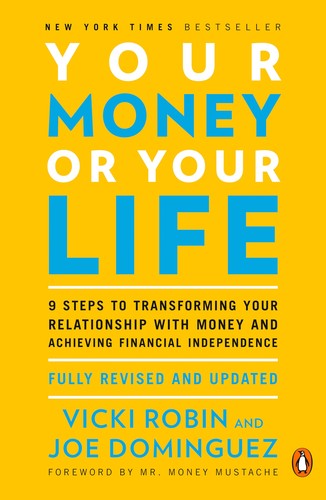
Is Your Money or Your Life still relevant in 2026?
In one paragraph
The philosophy is more relevant than ever — the 'life energy' reframe is the single most influential idea in the FIRE movement. But the specific 1992 tactics (especially the recommendation to put all savings in long-term US Treasuries) are obsolete. Read it for the framework; pair it with a modern index-fund book for the execution.
What this actually means
Vicki Robin and Joe Dominguez published Your Money or Your Life in 1992, and the 2018 revision updated the tactical chapters. Robin's central reframe — that money is life energy you've traded for, so spending decisions are really time-of-your-life decisions — is the most quoted idea in the early-retirement movement.
The nine-step program still works for steps 1-7 (track every dollar, calculate your real hourly wage, build a wall chart of income vs expenses). Step 8 is where it breaks. The original recommendation to invest savings in long-term US Treasury bonds made sense at 1992 rates when Treasuries paid 7-8%. At today's rates, Treasury-only allocation doesn't generate enough yield to support financial independence.
The 2018 revision acknowledges this and points to index-fund investing as the modern alternative. JL Collins wrote the foreword to that edition. The clean reading order is: Your Money or Your Life for the philosophy and tracking system, The Simple Path to Wealth for the investing execution.
The Psychology of Money is the other essential pairing — Housel's behavioral lessons reinforce the YMOYL discipline through a different lens.
Verdict: read it. The philosophy is durable. Just don't follow the original investment chapter — substitute Collins or Bogleheads guidance there.