What is FIRE and how do I achieve it?
In one paragraph
FIRE — Financial Independence, Retire Early — is a movement built on aggressively saving 50–70% of income, investing in low-cost index funds, and reaching a portfolio of 25x annual expenses to sustain indefinite withdrawals. The core insight is that the savings rate, not income, is the primary lever.
What this actually means
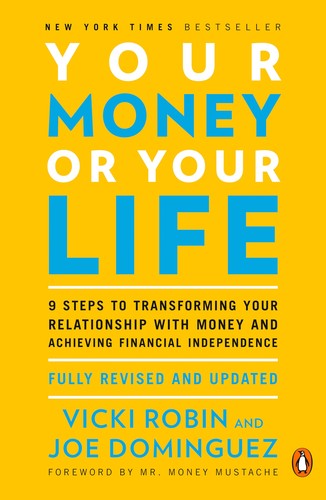
FIRE gained mainstream visibility in the 2010s but its intellectual roots go back to Vicki Robin and Joe Dominguez's 1992 book "Your Money or Your Life," which introduced the idea of measuring costs in "life energy" — hours of work — rather than dollars. The math was later popularized by bloggers like Mr. Money Mustache, who demonstrated that an engineer earning a median salary could retire in under a decade by optimizing spending and investing the gap.
The movement has split into several sub-categories. Lean FIRE targets a spartan lifestyle on $25,000–$40,000 a year; Fat FIRE seeks $100,000+ annually for those unwilling to sacrifice comfort; Barista FIRE involves semi-retirement with part-time work to cover healthcare and discretionary spending without fully drawing down the portfolio.
The math is unambiguous. Savings rate drives retirement timeline more powerfully than income. Someone saving 10% of income needs roughly 43 years to retire; at 50% savings, that drops to 17 years; at 70%, under 9 years. Compound interest does the rest.
Achieving FIRE requires executing on three levers simultaneously. The first is income growth — building skills, negotiating raises, pursuing higher-earning roles, or adding income streams. The second is expense optimization — not deprivation, but identifying spending that doesn't return proportional satisfaction. Housing, transportation, and food typically account for 60–70% of spending and offer the highest leverage. The third is investment efficiency — maximizing tax-advantaged accounts (401(k), IRA, HSA), minimizing expense ratios, and maintaining discipline through market downturns.
Healthcare before Medicare eligibility is the most common planning blind spot. Affordable Care Act marketplace plans, health-sharing ministries, COBRA bridge strategies, and geographic arbitrage (living in lower-cost areas or countries) each offer partial solutions.
Critics argue FIRE underestimates sequence-of-returns risk for long retirements, and overestimates the appeal of permanent leisure. Practitioners counter that financial independence — even without full retirement — creates options, reduces stress, and improves decision quality across every life domain.