
The Best Investing Books for Bull Markets.
How to ride rising markets wisely — avoiding the overconfidence traps that bull markets create
Bull markets are where most financial mistakes are made. Not because investors are reckless, but because rising prices validate whatever you're doing — even if what you're doing is taking on too much risk, paying too much for growth, or conflating a rising market with personal investment skill. The investors who do best in bull markets are the ones who use the good times to position themselves for the inevitable turn, rather than extrapolating the good times forward indefinitely. The best investing books for bull markets share a quality: they teach you how to capitalize on rising conditions without getting swept up in the euphoria that makes the next bear market so painful. That means identifying true growth businesses before they become overcrowded, understanding the difference between cyclical gains and compounding wealth, and maintaining the discipline to let winners run rather than trimming too early. These five books give you the tools to be a bull-market investor who builds lasting wealth rather than paper gains that evaporate in the next correction.
We selected books that help investors think rigorously about growth and opportunity in rising markets, with emphasis on titles that provide frameworks for identifying exceptional businesses, understanding long-run equity returns, and avoiding the overconfidence traps that bull markets reliably produce. We excluded books that simply celebrate rising markets without providing tools for distinguishing sustainable gains from speculative froth.
The list, in order
- №1◈ Best foundational data on equities
Stocks for the Long Run
by Jeremy J Siegel
◈CanonJeremy Siegel's landmark research demonstrates that equities outperform every other asset class over long time horizons — the foundational data that justifies staying invested during bull markets rather than moving to 'safer' assets as valuations rise. Now in its sixth edition, the book incorporates data through modern bull market cycles and remains the definitive quantitative case for equity ownership as a wealth-building strategy.
- №2◈ Best for market cycle positioning
How to profit from the next bull market
by Alan Dustin
Michael Turner's tactical guide to positioning for bull market conditions covers the sector rotations, leading indicators, and momentum signals that characterize different phases of a bull market. Unlike most investing books that focus on individual stock selection, Turner's framework helps investors understand where we are in the market cycle — and therefore where to concentrate exposure for maximum gain during the expansion phase.
- №3◈ Best for identifying growth companies
One Up On Wall Street
by Peter Lynch
◈CanonPeter Lynch managed his best returns during the powerful 1980s bull market, and this book captures exactly how he found stocks that delivered 10x, 20x, and 50x gains during that period. His categories of stocks — stalwarts, fast growers, turnarounds, cyclicals — give bull market investors a taxonomy for understanding which type of business they own and what kind of return to realistically expect. Essential for anyone trying to identify the next great growth company.
- №4◈ Best for long-term compounders
100 Baggers: Stocks That Return 100-to-1 and How To Find Them
by Christopher W Mayer · 2015
◈CanonChristopher Mayer's analysis of what 100-bagger stocks had in common is the ultimate bull-market guide for long-horizon investors. The key insight — that the main enemy of holding a 100-bagger is selling too early — is counterintuitive in bull markets when locking in gains feels like discipline. Mayer shows that the investors who made truly life-changing returns were the ones who bought exceptional businesses and then almost nothing.
- №5◈ Best for avoiding lifestyle inflation
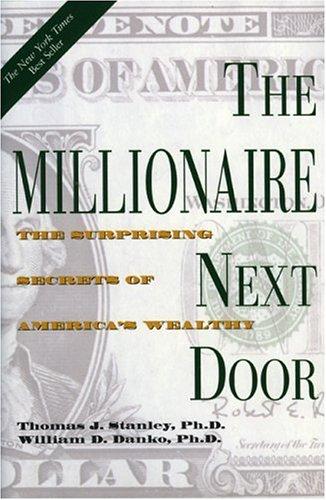
The Millionaire Next Door
by Thomas Stanley · 1996
◈Canon★Brian's PickStanley and Danko's research on actual millionaires is essential bull-market reading because it reveals the trap that rising markets set: as net worth increases, spending tends to accelerate faster than wealth creation. The millionaire-next-door types who built lasting wealth did the opposite — they used bull market gains to increase their investment rate, not their lifestyle. A necessary counterweight to the lifestyle inflation that bull markets encourage.


Get notified when our book picks change.
Set it once. We'll email you when a pick worth knowing about changes — no checking back.
Questions about this list
How do I know if we're in a bull market?
A bull market is conventionally defined as a 20% or greater rise in broad market indices from a recent low, sustained over time. However, the more useful question for investors is where we are within the cycle — early expansion, mid-cycle, or late-stage euphoria. How to Profit from the Next Bull Market covers the indicators that help answer that question with more precision than the simple definition.
Should I invest differently during a bull market?
The core strategy — owning diversified equities, reinvesting dividends, maintaining a long time horizon — shouldn't change dramatically. What should change is your vigilance about valuation. Bull markets inflate price-to-earnings ratios across the board, which means the margin of safety on any given stock is narrower. The books on this list help you navigate that tension without abandoning the market entirely.
When does a bull market become a bubble?
When asset prices decouple from the underlying earnings power of the businesses represented. Irrational Exuberance by Robert Shiller (not on this list but worth reading alongside these titles) covers the psychological and structural dynamics of bubble formation in detail. The books on this list help you stay grounded in business fundamentals, which is the best protection against buying into a bubble at its peak.