
The Best Investing Books for Retirees (2026).
From accumulation to distribution — the investing books that matter most in retirement
Retirement changes everything about how you should think about investing. The accumulation playbook — invest regularly, stay diversified, don't panic — doesn't map cleanly to distribution. In retirement you face sequence-of-returns risk, income floor requirements, longevity uncertainty, and decisions about Social Security timing, RMDs, and healthcare costs that no beginner investing book covers. The books on this list address this transition directly. They're written for people who have already built wealth and need to understand how to protect and distribute it rather than how to build it from zero. The frameworks here are different from what got you here — and that matters.
Books that address the distribution phase, income planning, longevity risk, or the specific behavioral challenges retirees face. We excluded books primarily focused on accumulation unless they have strong coverage of the transition period.
The list, in order
- №1◈ Best single-volume reference for retirees
The only investment guide you'll ever need
by Andrew P Tobias
Andrew Tobias's frequently-updated guide covers the full financial picture including the retirement distribution phase — Social Security decisions, withdrawal sequencing, and portfolio drawdown. The accessible, conversational tone makes complex tax-efficient distribution strategies digestible. Retirees who want a single reference that doesn't require a CFP credential to parse will find this practical and honest.
- №2◈ Best for simplifying a complex portfolio
The Simple Path to Wealth
by Jl Collins · 2016
◈Canon★Brian's PickJL Collins's case for simple index investing extends into retirement via his "wealth preservation" and distribution chapters. The book addresses the 4% rule, sequence risk, and the psychology of watching a portfolio decline while drawing income from it. For retirees considering whether to simplify a complex portfolio built over decades, Collins's argument for simplicity in the distribution phase is compelling.
- №3◈ Best case for staying invested in equities
Stocks for the Long Run
by Jeremy J Siegel
◈CanonJeremy Siegel's long-term return data is essential context for retirees who are worried about equity exposure. The historical evidence for equity outperformance over long periods doesn't disappear at age 65 — retirees with 20-30 year horizons are still long-term investors. This book provides the data-backed rationale for maintaining equity allocation into retirement rather than defaulting to bonds out of fear.
- №4◈ Best for planning around cognitive change
Aging and Money
by Ronan M Factora
This book addresses the intersection of cognitive aging and financial decision-making — a topic almost no investing book touches but that affects every retiree eventually. Understanding how judgment changes with age, when to delegate financial decisions, and how to build systems that protect against exploitation is as important as any asset allocation decision in retirement. An uncomfortable but necessary read.
- №5◈ Best practical reference for retirement mechanics
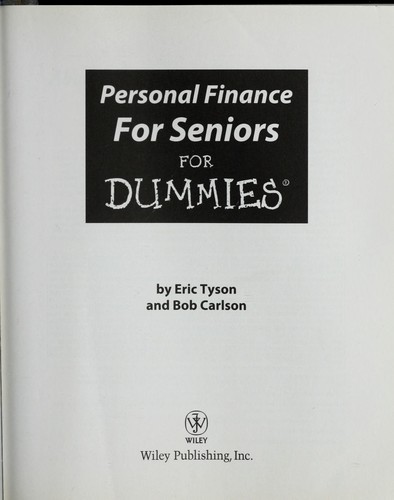
Personal finance for seniors for dummies
by Eric Tyson
The Dummies series has a poor reputation among sophisticated investors, but this volume covers the practical mechanics of retirement finance — Medicare, Medicaid, Social Security optimization, estate documents, and RMD calculations — that most investing books skip entirely. Retirees who want a plain-language reference for the administrative decisions alongside the investment ones will use this book repeatedly.


Get notified when our book picks change.
Set it once. We'll email you when a pick worth knowing about changes — no checking back.
Questions about this list
How should retirees think about equity allocation?
The old rule of thumb — 100 minus your age in bonds — was designed for shorter life expectancies. With 20-30 year retirements now common, most financial planners suggest retirees maintain 40-60% equity exposure to avoid outliving their money. Stocks for the Long Run provides the historical data behind this; The Simple Path to Wealth gives the practical implementation. The right allocation depends on your income floor, spending needs, and risk tolerance.
What is sequence-of-returns risk and why does it matter?
Sequence risk is the danger that poor market returns early in retirement — combined with ongoing withdrawals — can permanently deplete a portfolio even if long-term average returns are fine. A 30% loss in year one of retirement does more damage than the same loss in year 15, because you're drawing down a smaller base throughout. The Simple Path to Wealth addresses this most directly on this list.
Should retirees be reading books about accumulation at all?
Selectively. The mindset books — especially around behavioral finance and not panic-selling — apply at every stage. But the mechanics change substantially in distribution. Retirees should focus on books that address income sequencing, tax-efficient withdrawal, longevity risk, and estate planning rather than the typical beginner accumulation advice about dollar-cost averaging and long time horizons.