

Personal finance for seniors for dummies

Curated by Brian Kim, CPA — every pick gets a plain-English summary and the key takeaways.
Brian Kim, CPA · 2.89M YouTube Subscribers →What this book actually teaches
- 01Retirement finance is a distribution discipline, not an accumulation one — the book reorients around income generation, capital preservation, and sequence-of-returns risk.
- 02The Social Security section covers early vs. delayed claiming and spousal benefit strategies in concrete terms that are genuinely useful for pre-retirees making this decision.
- 03Medicare navigation — Parts A, B, D, and Medigap — is explained from scratch and is one of the most accessible treatments of the topic in the personal finance genre.
- 04Annuities get a balanced treatment rather than a promotional one, which distinguishes this from books with undisclosed sales-side incentives.
- 05Specific numbers (contribution limits, Medicare premiums, Social Security thresholds) are dated from 2010 and must be verified against current SSA and CMS sources before acting on them.
What's in this book
Eric Tyson's central argument is that personal finance for retirees and near-retirees is a distinct discipline from personal finance for working-age adults — the questions are different, the stakes are higher, and the consequences of common mistakes (outliving assets, poor healthcare planning, estate fumbles) are largely irreversible. The book organizes this insight into a practical reference covering retirement income strategy, Social Security optimization, Medicare navigation, estate planning basics, and investment allocation for a phase of life defined by distribution rather than accumulation.
Tyson's treatment of Social Security is one of the book's stronger sections. He explains the mechanics of early versus delayed claiming in concrete terms, walks through spousal benefit strategies, and addresses the tax treatment of benefits — all of which are genuinely complex and frequently misunderstood. The Medicare section does similar work, walking through the differences between Part A, Part B, Part D, and Medigap coverage without assuming the reader has any prior familiarity with the system. For a reader entering Medicare eligibility for the first time, this alone justifies picking up the book.
The investment allocation chapters argue for a shift in mindset from growth to income-generation and capital preservation, with attention to sequence-of-returns risk — the danger that large early withdrawals during a market downturn can permanently impair a retirement portfolio even if long-run returns recover. Tyson introduces the concept accessibly without requiring financial modeling skills. His coverage of annuities is balanced rather than promotional, which is rarer than it should be in this category.
The weaknesses are real. The 2010 publication date means some specifics — contribution limits, Medicare premium thresholds, Social Security benefit calculations for given income levels — are outdated and must be verified against current SSA and CMS sources. The book is also uneven in depth: the investment chapters are solid, but the tax and estate sections stay at a surface level that more complex family situations will quickly outgrow. And the For Dummies format, while accessible, occasionally sacrifices nuance for readability in areas where nuance matters (Roth conversion strategy, for example, gets briefer treatment than it deserves).
For readers within five to ten years of retirement, or already in retirement and managing their own finances without professional help, this is a competent orientation to the terrain. Update the specific numbers from official sources and supplement with a fee-only financial planner for anything involving estate complexity or significant tax planning.
Read next

For anyone whose financial education was "get a good job and save" — the book is most valuable for first-time readers…
Buy on Amazon →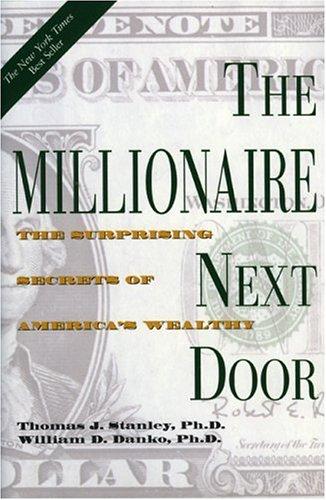
For anyone who confuses high income with wealth, or who feels behind because their lifestyle doesn't look like the we…
Buy on Amazon →
Anyone who earns enough to make discretionary spending choices but suspects their spending is not generating proporti…
Buy on Amazon →
Households in active consumer-debt distress who need a non-negotiable shared script. Not for investors already past B…
Buy on Amazon →About Eric Tyson
Read more from Eric Tyson and explore the full bibliography on ClearValue Books.
View Eric Tyson's page →Get an email if our take on Personal finance for seniors for dummies changes.
We re-review our picks. We'll email you if Personal finance for seniors for dummies's ranking or review changes — no checking back.
Across the site
Featured in lists
On Brian's lists

Ready to read Personal finance for seniors for dummies?
Buy the edition we recommend on Amazon.
Buy on Amazon →