
FIRE Number Calculator.
Multiply your annual expenses by 25 to find the portfolio size that funds retirement indefinitely — the central equation behind the Financial Independence, Retire Early movement.
Before you run the numbers.
The FIRE number is the single most clarifying calculation in personal finance. It converts the abstract goal of "financial independence" into a concrete dollar target you can track every month.
The formula is straightforward: take what you spend in a year, multiply by 25. That product — your FIRE number — represents the portfolio size at which a 4% annual withdrawal sustains your lifestyle without you ever depleting principal, assuming the portfolio earns roughly 7–8% in real terms and you manage sequence-of-returns risk sensibly.
Why 25? It is the inverse of the 4% safe withdrawal rate, the figure that emerged from William Bengen's 1994 research and was later reinforced by the Trinity Study (1998). Across every 30-year historical window examined, a 4% initial withdrawal rate — adjusted annually for inflation — left portfolios intact. Multiply annual spend by 25 and you land on the starting balance that makes that withdrawal sustainable.
The most important implication of the formula is how powerfully your spending level determines your timeline. Spending $40,000 per year sets your target at $1,000,000. Spending $60,000 sets it at $1,500,000 — a 50% longer runway. Reducing expenses by $500 per month shrinks your target by $150,000 and simultaneously frees that $500 to invest. Every dollar you don't spend does double duty.
The 4% rule assumes a portfolio weighted toward equities (roughly 60% stocks, 40% bonds or similar). More conservative allocations may require a 3–3.5% withdrawal rate, pushing the multiplier to 29–33. Early retirees with 40- or 50-year horizons often target 3.25–3.5% to add margin of safety. Use this calculator as a planning anchor, not a guarantee — sequence of returns and personal spending variation matter enormously in practice.
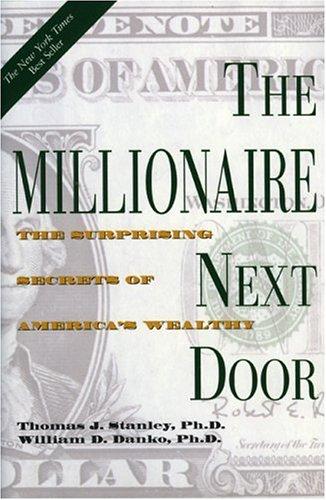
Books like *Your Money or Your Life* and *The Simple Path to Wealth* shaped the intellectual foundations of FIRE long before the acronym existed. The math was always there; what changed was who decided to apply it.
Run your scenario.
See a worked example
You spend $50,000 a year and plan around the classic 4% safe withdrawal rate.
FIRE number = annual expenses / (SWR / 100)
= 50,000 / 0.04 = 50,000 × 25 = $1,250,000
At $1.25M, a 4% first-year withdrawal is exactly your $50,000 of spending. Drop your spending to $40,000 and the target falls to $1,000,000 — every dollar you don't spend both shrinks the target and frees cash to hit it faster.
Educational tool, not financial advice. The 4% rule is a historical planning heuristic, not a guarantee — it came from 30-year US market windows and may need a lower rate (3–3.5%) for longer retirements. The years-to-FIRE projection assumes a constant real return and steady contributions; real markets and spending vary, and sequence-of-returns risk matters. This ignores taxes and Social Security. Consult a licensed financial professional before making retirement decisions.



Common questions.
Is the 4% rule still valid?
The original research used 30-year retirements and historical US market returns. For longer retirements — 40 or 50 years — many planners use 3.25–3.5%. The 4% rule is a starting point, not a ceiling: flexible spending (cutting back in down years) extends it significantly.
What counts as "annual expenses" in the formula?
Everything you actually spend: housing, food, transport, healthcare, travel, taxes on withdrawals. Most people undercount by 10–20%. Pull 12 months of bank and credit card statements before you run this number — gut estimates are almost always too low.
Should I include Social Security in my FIRE number?
Yes. If you expect Social Security income, subtract it from your annual expense target before multiplying by 25. A $60,000 budget minus $18,000 in projected Social Security means you only need to fund $42,000 — a $1,050,000 target instead of $1,500,000.