
The Most Influential Finance Books Ever Written.
The canon — five books that changed how the world thinks about money
Some books change an industry. A handful change how an entire civilization thinks about wealth. The five books on this list belong to the second category. They were written across different eras, for different audiences, with different frameworks — but each one introduced an idea so original and so correct that it permanently altered the investment landscape. 'The Intelligent Investor' gave the world value investing and the concept of Mr. Market. 'Common Stocks and Uncommon Profits' reframed growth investing around business quality rather than price. 'The Psychology of Money' mainstreamed the behavioral understanding of wealth. 'Your Money or Your Life' created the modern financial independence movement. 'Think and Grow Rich' — whatever its critics say — reached more people with the message that wealth is achievable than any other book in print. If you read only five finance books in your life, read these.
Evaluated on demonstrated cultural and intellectual influence: citations by later authors and practitioners, measurable impact on investment behavior, and durability across market cycles spanning decades. Books with high sales but limited intellectual influence were excluded in favor of titles whose core ideas became foundations for entire fields.
The list, in order
- №1◈ Value Investing Canon
The Intelligent Investor
by Benjamin Graham · 1949
◈Canon★Brian's PickBenjamin Graham's 1949 masterwork is the most cited investment book ever written, and the reason is that its central ideas — margin of safety, Mr. Market as an allegory for market psychology, the distinction between investment and speculation — remain true across every market cycle. Warren Buffett called it 'by far the best book on investing ever written.' The 1973 revised edition with Jason Zweig's commentary is the version to read; the commentary translates Graham's principles into contemporary language without softening them.
- №2◈ Growth Investing Canon
Common Stocks and Uncommon Profits and Other Writings
by Philip A Fisher · 1996
Philip Fisher's 'scuttlebutt' method — the practice of researching companies by talking to suppliers, customers, and competitors rather than relying solely on financial statements — became the intellectual foundation for growth investing and influenced Warren Buffett's evolution from pure Grahamite to the quality-focused investor he became. The '15 points to look for in a common stock' checklist is one of the most reprinted passages in investment literature for good reason: it still works.
- №3◈ Behavioral Canon
The Psychology of Money
by Morgan Housel · 2020
◈Canon★Brian's PickMorgan Housel's 2020 collection of essays has had an impact on investor behavior that most investment classics took decades to achieve. By framing wealth accumulation as primarily a behavioral challenge rather than an intellectual one, Housel reached an audience that Graham and Fisher never could — people who didn't consider themselves investors. The book's influence on the financial independence and personal finance communities has been as significant as its influence on professional investors.
- №4◈ Financial Independence Canon
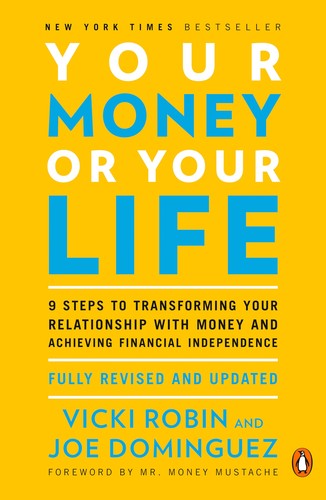
Your Money or Your Life: 9 Steps to Transforming Your Relationship with Money and Achieving Financial Independence
by Vicki Robin · 1992
◈CanonVicki Robin and Joe Dominguez's 1992 book invented the modern financial independence movement twenty years before FIRE became an internet phenomenon. Their framework for calculating 'life energy' — the true cost of money measured in hours of your life — reframes every spending decision and every income goal in terms that pure arithmetic cannot capture. The concept of the 'crossover point,' where investment income exceeds expenses, is the mathematical foundation that the entire FI/RE community built on.
- №5◈ Achievement Psychology Canon
Think and Grow Rich
by Napoleon Hill
◈CanonNapoleon Hill's 1937 synthesis of interviews with Carnegie, Ford, Edison, and hundreds of other wealthy individuals remains the best-selling personal finance book of all time for a reason that its critics consistently underestimate: it identified that belief, persistence, and definiteness of purpose are genuine causal factors in wealth accumulation — not merely correlates. The specific 'Law of Attraction' language is dated; the behavioral insights about the psychology of goal-setting and persistence under adversity are not.



Get notified when our book picks change.
Set it once. We'll email you when a pick worth knowing about changes — no checking back.
Questions about this list
Which of these should I read first?
Start with 'The Psychology of Money.' It's the most accessible and will immediately improve your investment behavior regardless of your experience level. Then read 'The Intelligent Investor' if you're interested in security selection, 'Your Money or Your Life' if financial independence is your goal, or 'Think and Grow Rich' if building wealth is a newer aspiration. 'Common Stocks and Uncommon Profits' should follow 'The Intelligent Investor' — it completes the intellectual foundation for equity investing.
Are books from the 1930s and 1950s really still relevant?
The ones on this list, yes — because they address human psychology and market structure, not specific securities or market conditions. Graham's Mr. Market allegory describes the same irrational price swings in 2026 that it described in 1949. Fisher's scuttlebutt method works as well on technology companies as it did on manufacturers. The specific examples change; the principles don't.
What makes a finance book truly influential vs. just popular?
Influence requires that a book's core ideas become so absorbed into mainstream thinking that people use the concepts without knowing where they came from. 'Margin of safety' is now finance vocabulary; most people who use the phrase have never read Graham. The 'crossover point' is the intellectual center of the FIRE movement; Robin and Dominguez aren't always credited. That degree of idea diffusion is the real measure of influence.