
The Psychology of Money vs Happy Money: Which Book Actually Changes How You Spend.
Two books, one decision — which one belongs on your shelf.
Side by side

For investors who know what to buy but struggle to hold it — especially anyone who has sold at a low or…
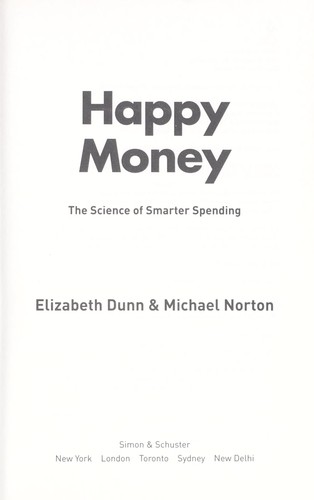
Anyone who earns enough to make discretionary spending choices but suspects their spending is not generating…
What we're comparing
Morgan Housel's The Psychology of Money and Elizabeth Dunn and Michael Norton's Happy Money both argue that your relationship with money matters more than the amount you have — but they attack the problem from different angles. Housel examines the behavioral biases and personal histories that shape wealth-building decisions over a lifetime. Dunn and Norton draw on happiness research to show that how you spend money matters more than how much you spend. Together they answer a question neither asks alone: how do you accumulate wealth and actually feel good about it?
Best for — depends on the reader
Anyone whose investing behavior contradicts what they intellectually know — panic sellers, performance chasers, people paralyzed by market noise. Works for any age and experience level.
People with discretionary income who feel vaguely dissatisfied despite adequate means. High earners who upgrade lifestyle without upgrading happiness will find the most value here.
By the attributes: The Psychology of Money leads on audiobook edition. There is no single overall "winner" — the right book is the one that fits the reader.
Attribute by attribute
A check marks an objective capability a book offers (e.g. an audiobook edition). Publication year and length are shown as facts, not scored — newer or shorter isn't "better" for a classic. Confirm current editions on Amazon.
Dimension by dimension
Which one belongs on your shelf
“These books are complements, not competitors. The Psychology of Money teaches you how to accumulate wealth without destroying it through bad behavior. Happy Money teaches you how to enjoy what you accumulate without wasting it on things that don't move the needle on life satisfaction. Read The Psychology of Money first — it clears the behavioral obstacles to building wealth. Then read Happy Money to calibrate how you actually use it. Most personal finance books cover the accumulation side; Happy Money is rare in addressing the spending side with rigor. Both are short, dense with insight, and worth reading in a single sitting.”
Common questions
Do these books contradict each other on spending?
No. Housel emphasizes frugality and saving; Dunn and Norton emphasize spending wisely. The resolution: save aggressively and spend the discretionary portion on high-happiness categories (experiences, time, others) rather than status goods. The books describe different parts of the same financial life.
Is Happy Money relevant if I'm still in debt?
Partially. The "pay now, consume later" principle is immediately useful regardless of net worth — anticipation is itself a happiness driver. The full framework applies more cleanly once discretionary spending exists, so clear high-interest debt first, then deploy the Happy Money playbook.
Which one changes behavior more?
Happy Money, for most readers — the five spending principles are immediately actionable and the effect is visible within weeks. Psychology of Money changes your investing framework over months and years as you watch yourself not panic during downturns. Both produce behavioral change; they just operate on different timescales.