
Think and Grow Rich vs The Millionaire Next Door: Mindset vs Data.
Two books, one decision — which one belongs on your shelf.
Side by side

Entrepreneurs and professionals who want a foundational framework for understanding the mindset disciplines…
For anyone who confuses high income with wealth, or who feels behind because their lifestyle doesn't look…
What we're comparing
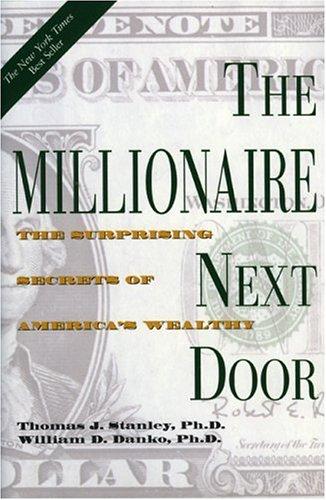
Napoleon Hill's Think and Grow Rich is the founding text of the wealth mindset genre — desire, faith, persistence, and the "mastermind" principle, distilled from interviews with Carnegie-era titans. Thomas Stanley's The Millionaire Next Door is a sociological counterpoint: actual millionaires, surveyed over 20 years, look nothing like Hill's glamorous framework predicts. One gives you fire; the other gives you facts. Reading them together reveals why both are necessary — and where each one misleads.
Best for — depends on the reader
Readers who need a mindset shift — who've accepted a limiting story about what they're capable of achieving. Best for early-career readers who need permission to aim higher. Works for entrepreneurs and salespeople who need psychological tools.
High-income professionals whose net worth doesn't match their earnings. Doctors, lawyers, executives who feel wealthy but aren't. Anyone who conflates spending power with wealth-building. The corrective for status-consumption.
Attribute by attribute
A check marks an objective capability a book offers (e.g. an audiobook edition). Publication year and length are shown as facts, not scored — newer or shorter isn't "better" for a classic. Confirm current editions on Amazon.
Dimension by dimension
Which one belongs on your shelf
“Read Think and Grow Rich for permission and ambition; read The Millionaire Next Door for discipline and calibration. Hill tells you to aim at wealth; Stanley shows you what actual wealth looks like from the inside. The danger of Hill alone is magical thinking — desire without a mechanism. The danger of Stanley alone is that frugality without income growth or ownership just produces a modest nest egg slowly. The synthesis: Stanley's discipline + Hill's ownership ambition + a modern execution system (automation, indexing, business equity) = the complete picture.”
Common questions
Is Think and Grow Rich actually about money or about mindset?
Both, but primarily mindset. Hill argues the mindset IS the mechanism — that wealth follows certain psychological states. Most readers extract it as a motivational book with financial framing. The practical chapters on organized planning and the mastermind are the most actionable.
Has Stanley's millionaire research been updated since 1996?
Yes — Stanley and his daughter Sarah Stanley Fallaw published The Next Millionaire Next Door in 2018, which updates the findings with modern data. The core findings are largely consistent: frugality, business ownership, and under-consumption of status goods remain the signature traits.
Can both books be wrong while still being useful?
Yes, and that's actually the right frame. Hill's mechanism (desire → wealth) is not empirically supported as stated. Stanley's prescription (frugality alone) is harder to execute today than in 1996. Both books are useful as frameworks and motivators, not as literal instruction manuals.