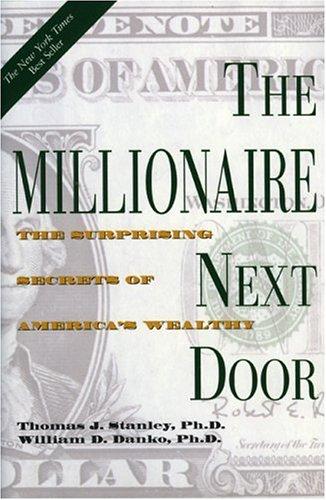
“Most people who live in expensive homes and drive luxury cars do not actually have much wealth. And those people with a great deal of wealth are not living in upscale neighborhoods.”
Why this matters.
This is the empirical inversion at the heart of Stanley and Danko's research — and it was genuinely surprising when the data first appeared. The intuition most people carry about wealth and its visible signals is the inverse of the observable reality.
The research found that the median American millionaire — defined as a household with net worth over $1 million — lived in a house worth approximately $320,000 (in 1990s dollars), drove an American-made car, and had never paid more than $400 for a suit. By contrast, households in high-status zip codes with luxury vehicles and designer wardrobes were often carrying heavy debt to sustain that appearance, with net worth a small fraction of what their consumption level implied.
The behavioral mechanism is clear. Status goods are expensive to acquire and expensive to maintain. A household that spends $1,500 per month on luxury car payments is diverting money that, invested over 30 years, would produce hundreds of thousands of dollars in wealth. The car depreciates; the invested equivalent compounds. The wealth gap between the status spender and the index fund investor compounds alongside the investment.
For anyone making decisions about where to live, what to drive, or how to present financially, this finding raises a useful question: is this consumption choice building equity and net worth, or consuming income in exchange for a signal that misleads observers about actual financial position? The millionaire next door chose differently — and the research shows where that choice leads.