
Compound Interest: The Foundational Concept Behind Every Wealth-Building Strategy.
Why time in the market matters more than timing the market
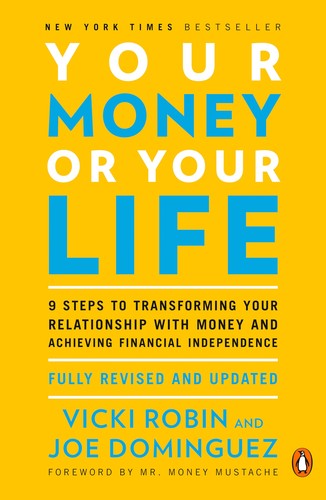
Compound interest is the mechanism by which investment returns generate their own returns, creating exponential rather than linear growth over time. Albert Einstein reportedly called it the eighth wonder of the world — and while the attribution may be apocryphal, the mathematics are not. A single dollar invested at a 7% annual return becomes roughly $7.61 over 30 years without any additional contributions. Add consistent monthly investments and reinvested dividends, and the effect becomes dramatic enough to transform middle-income earners into millionaires across a working lifetime. The concept applies equally to debt. The same compounding that builds wealth in an investment account works against borrowers who carry revolving credit card balances, which is why financial educators consistently prioritize eliminating high-interest debt before accelerating investment. Understanding which direction compound interest is working — for you or against you — is the prerequisite for every other personal finance decision. Several variables control the outcome: the principal invested, the interest rate (or expected annual return), the compounding frequency, and above all, time. Of these, time is the variable most people underestimate and most commonly waste. Investors who begin at 22 rather than 32 may need to contribute only half as much total capital to reach the same retirement balance. The books collected on this topic explore compounding not as a mathematical abstraction but as the practical engine behind index fund investing, debt payoff strategies, and long-term wealth accumulation.


Questions about this theme
How often does compounding frequency actually matter for long-term investors?
For most index fund and brokerage account investors, compounding frequency matters less than expected because modern funds reinvest dividends continuously and price changes compound in real time. The difference between annual and daily compounding at 7% over 30 years is less than 0.5% in total value — meaningful but dwarfed by the impact of contribution amounts and the annual return rate itself. Frequency becomes more significant with high-interest debt, where daily compounding on a 20% APR credit card meaningfully accelerates the balance relative to monthly compounding.
What is the Rule of 72 and how does it relate to compound interest?
The Rule of 72 is a mental shortcut for estimating how long it takes an investment to double. Dividing 72 by the annual interest rate gives the approximate number of years to double: at 6%, money doubles in roughly 12 years; at 9%, in 8 years. The rule works in reverse for inflation and debt — a 4% inflation rate halves purchasing power in about 18 years. It is a practical tool for comparing investment options and understanding why a few percentage points of return difference compounds into enormous wealth gaps over decades.
Why do financial planners emphasize starting early even with small amounts?
Because of the asymmetric relationship between time and outcomes in compound growth, early small contributions outperform later large ones over a long horizon. A 22-year-old investing $200 per month who stops at 30 and never adds another dollar will often retire with more wealth than a 30-year-old who invests $400 per month consistently through age 65. The first investor contributes far less total capital but gains eight additional years of compounding. This counterintuitive dynamic is one of the most powerful arguments for beginning to invest immediately rather than waiting for a larger disposable income.