Is it worth getting an MBA?
In one paragraph
An MBA delivers the highest return for people pursuing large corporate leadership roles or investment banking; for entrepreneurs and operators already running businesses, the cost-benefit case is weak compared to deploying the same capital and two years directly into the business.
What this actually means
The MBA debate has been running for decades, and the honest answer is that it depends almost entirely on what the degree is being used for. For someone targeting a partner track at a consulting firm, a corporate development role at a Fortune 500, or a career in investment banking, a top-tier MBA is still a meaningful signal and network accelerator. The credential functions as a filtering mechanism, and in those industries the filter matters.
For founders, operators, and business owners — the audience most likely to be reading widely about business — the calculus is different. The opportunity cost of an MBA is not just tuition and living expenses, typically $150,000 to $250,000 in total cost of attendance at top programs. It is also two years of operating leverage, compounding returns, and market position lost while sitting in a classroom.
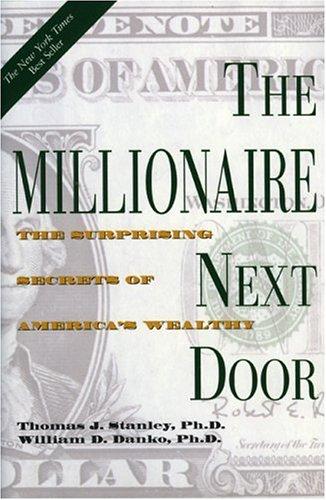
The most counterintuitive finding from studying how wealth is actually built — as documented in "The Millionaire Next Door" by Thomas Stanley and William Danko — is that the majority of high-net-worth individuals in the United States are not executives with professional credentials. They are business owners in unglamorous industries who kept expenses low, reinvested capital, and accumulated over long periods. The credential economy that MBAs serve is largely orthogonal to that path.
"Rich Dad Poor Dad" by Robert Kiyosaki makes a blunter version of the same point: formal education is optimized for producing employees, not investors or operators. The assets that produce financial independence — businesses, real estate, equity — are not learned in school. They are learned by doing, by failing, and by reading the people who have done it before.
"Creating Shareholder Value" by Alfred Rappaport, a text used in business schools, is available without the degree. The frameworks that MBAs teach are largely accessible through targeted reading and practice. For someone already in business, a focused self-education program costs a fraction of an MBA and can be applied immediately rather than after graduation.