What is the best book for a first-time founder?
In one paragraph
Rich Dad Poor Dad is the most widely recommended starting point for first-time founders — it reframes how money, assets, and income-generating businesses work. For execution over mindset, Think and Grow Rich delivers the mental framework that has launched more businesses than nearly any other book.
What this actually means
First-time founders tend to underestimate how much of early-stage business success is psychological — the willingness to take risk, tolerate uncertainty, and reframe failure as data. That's why the most useful books for founders often start with mindset before mechanics.
Rich Dad Poor Dad, Robert Kiyosaki's foundational text, draws a clean distinction between assets (things that generate income) and liabilities (things that drain it) — a distinction that most employees never internalize but every successful founder must. The book doesn't teach accounting; it rewires how readers think about money, work, and ownership. First-time founders who read it before launching tend to make better early decisions about reinvesting revenue versus drawing salary.
Think and Grow Rich, published in 1937 but updated by subsequent authors, catalogues the mindset patterns of successful entrepreneurs through Napoleon Hill's interviews with Carnegie, Edison, and Ford. Its core contribution — the notion that a definiteness of purpose, combined with persistence and a mastermind group, unlocks results unavailable to scattered thinking — remains as applicable to a founder building a SaaS product as it was to an industrialist a century ago.
Warren Buffett's Management Secrets speaks to the organizational instincts that separate sustainable businesses from flash-in-the-pan startups. Even at the early stage, founders who understand how to build systems and culture — rather than just products — compound their advantages over time.
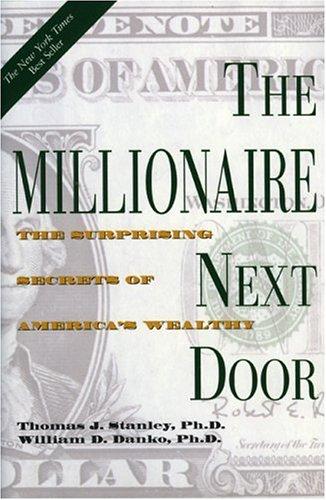
For founders who want the personal finance fundamentals alongside business principles, The Millionaire Next Door offers a grounding counterweight: real-world data on how wealth-builders actually operate, emphasizing frugality and deliberate financial choices that many founders ignore while chasing growth.
The ideal first-time founder reading sequence: start with Rich Dad Poor Dad to reframe asset thinking, layer in Think and Grow Rich for execution mindset, and pick up The Millionaire Next Door once revenue is generating and capital allocation decisions become real.