How do I stop comparing myself to others financially?
In one paragraph
Financial comparison is wired into social behavior, but research shows it reliably increases spending and reduces satisfaction — several books offer frameworks for redirecting that instinct toward more useful benchmarks.
What this actually means
Social comparison around money is not a character flaw — it is a deeply human behavior with evolutionary roots in group status. The problem is that in modern consumer society, social comparison has been weaponized by marketing, amplified by social media, and systematically misdirected toward visible consumption (cars, homes, vacations) rather than actual financial health. The neighbor with the new car may be carrying debt that would be alarming on close inspection.
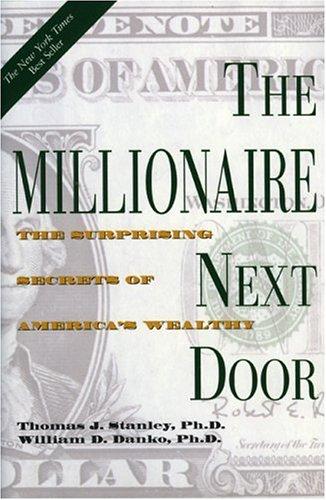
"The Millionaire Next Door" by Thomas Stanley and William Danko is one of the most effective books for disrupting financial comparison. Its central finding — that most genuinely wealthy Americans live in modest homes, drive used cars, and avoid conspicuous consumption — directly contradicts the signals most people use as comparison anchors. Readers who absorb this research often find their reference points shift permanently.
"The Overspent American" by Juliet Schor examines how comparison groups have expanded from neighbors to television characters and aspirational lifestyle media, creating a permanent gap between actual income and the lifestyle standard being chased. Naming this dynamic precisely — and tracing its economic and media origins — gives readers critical distance from it.
"The Psychology of Money" by Morgan Housel offers the reframe that financial goals are personal by definition. No two people have the same risk tolerance, time horizon, life circumstances, or definition of enough. Comparing financial positions across different people with different goals is, Housel argues, a category error — and recognizing this makes the comparison instinct easier to redirect.
"Happy Money" provides research evidence that the spending patterns associated with keeping up with others (buying things, upgrading possessions) are among the least effective at generating actual well-being, while the spending patterns associated with genuine satisfaction have little to do with social signaling.