What is lifestyle creep?
In one paragraph
Lifestyle creep is the gradual increase in spending that accompanies income growth, where each raise or windfall is absorbed into a higher baseline of living expenses rather than directed toward savings or wealth-building.
What this actually means
Lifestyle creep — sometimes called lifestyle inflation — is one of the most common explanations for why high earners fail to accumulate meaningful wealth. The phenomenon is simple: as income rises, spending rises proportionally or faster, leaving the savings rate constant or declining even as gross income grows substantially.
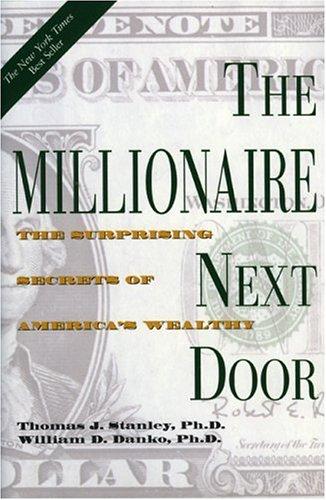
Thomas Stanley's research in The Millionaire Next Door provides the canonical data on this dynamic. The book's landmark finding — that most American millionaires live in ordinary neighborhoods, drive modest cars, and shop at discount retailers — directly contradicts the expectation that wealth follows visible income. The households that build wealth are those where income growth consistently outpaces spending growth, not those where the two move in lockstep.
The Psychology of Money by Morgan Housel frames lifestyle creep through the lens of the hedonic treadmill: humans rapidly adapt to higher standards of living, meaning the satisfaction from a nicer apartment, a newer car, or a premium subscription is temporary while the cost is permanent. The book argues that the most powerful financial lever available to high earners is not investment returns but savings rate — and lifestyle creep is the primary enemy of savings rate.
JL Collins's The Simple Path to Wealth makes the math explicit: a household that earns $150,000 and spends $140,000 is building wealth more slowly than a household earning $90,000 and spending $60,000. The dollar savings rate, not the income level, determines how quickly wealth compounds.
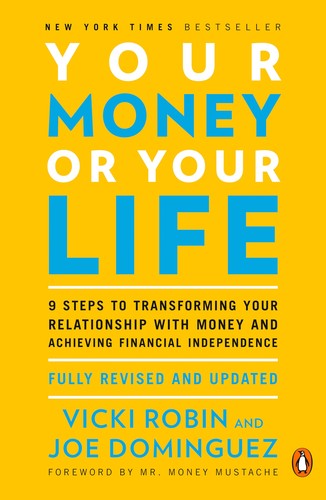
Your Money or Your Life by Vicki Robin addresses lifestyle creep at its root: by calculating the "life energy" (hours of work) required for each expense, readers develop a more visceral sense of what sustained spending increases actually cost in time — which is often a more powerful motivator than abstract dollar amounts.