
The Best Investing Books for Beginners (2026).
Where to start if you've never read an investing book
Most investing books are written for people who already know what a brokerage account is. The four books below aren't — they're written for the first-time reader who wants the foundation right. We picked them by asking: if someone read ONE book before opening their first brokerage account, which one gives them the highest chance of not panicking in their first downturn? These four answer that question in different ways, ordered from "absolute beginner" to "slightly more advanced."
Books that work for first-time readers, written in plain English, focused on principles rather than tactics. We excluded books that lead with stock-picking specifics (those work after the mindset is set, not before).
The list, in order
- №1◈ Best for absolute beginners
The Psychology of Money
by Morgan Housel · 2020
◈Canon★Brian's PickStart here. Housel teaches you to think about money behaviorally before you make any decisions. 20 short essays — you can finish in a weekend. If you only read one book on this list, read this.
- №2◈ Best for building the framework
The Intelligent Investor
by Benjamin Graham · 1949
◈Canon★Brian's PickThe foundational framework for investing. The 2003 Zweig commentary edition modernizes the examples. Read this AFTER The Psychology of Money — Graham's principles land harder once you have the mindset.
- №3◈ Best for resetting your expectations
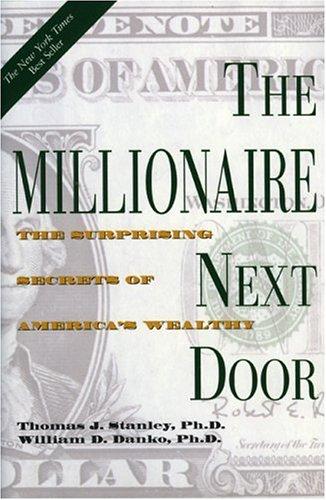
The Millionaire Next Door
by Thomas Stanley · 1996
◈Canon★Brian's PickNot strictly an investing book — but it teaches you what wealth actually looks like vs what TV shows you. The Prodigious Accumulator of Wealth formula will recalibrate your expectations for years.
- №4◈ Best for the mindset reset
Rich Dad Poor Dad
by Robert Kiyosaki · 1997
◈Canon★Brian's PickPolarizing pick — Kiyosaki's recent media has hurt the brand. But the ORIGINAL book's assets-vs-liabilities framework still teaches a useful lesson. Read it once for the mindset reset, then move on. Don't follow his current public stuff.



Get notified when our book picks change.
Set it once. We'll email you when a pick worth knowing about changes — no checking back.
Questions about this list
Which book should I read first?
The Psychology of Money. It's the most beginner-accessible — 20 short essays you can finish in a weekend. It teaches you to think about money behaviorally before you have to make any decisions, which prevents the most common beginner mistake (panic-selling in a downturn).
Do I need to read all four?
No. If you can only read one, read The Psychology of Money. If you can read two, add The Intelligent Investor. The other two are bonus — they reset your expectations about wealth and money mindset, but aren't load-bearing for beginning to invest.
Should I read Rich Dad Poor Dad given Kiyosaki's recent media?
Read the original book once, ignore his current media. The assets-vs-liabilities framework in the original is still useful for beginners. His recent public commentary has drifted into questionable territory — that's his problem, not the book's.
What about Burton Malkiel or John Bogle?
Both are excellent for beginners — A Random Walk Down Wall Street (Malkiel) and The Little Book of Common Sense Investing (Bogle) deserve consideration. We didn't include them here because they overlap heavily with The Intelligent Investor's lessons, but either is a great alternative pick.
How long will these take to read?
Psychology of Money: 4-6 hours. The Intelligent Investor (2003 ed.): 15-20 hours. The Millionaire Next Door: 5-8 hours. Rich Dad Poor Dad: 4-6 hours. Total for all four: 30-40 hours of reading time.