
Best Retirement Books for Couples (2026).
Retiring together requires coordinating two timelines, two Social Security records, and one shared vision of enough.
Retirement planning for couples is more complex than doubling a single person's plan. Two earners may have different retirement ages, different Social Security benefit levels, different risk tolerances, and different ideas about what a good retirement looks like. Spousal Social Security strategies — including when to claim, whether to file for spousal benefits, and survivor benefit planning — can be worth tens of thousands of dollars in aggregate lifetime income. Joint healthcare planning between the early retiree's exit date and Medicare eligibility for each spouse adds another layer. And then there's the spending-alignment problem: couples who haven't explicitly agreed on what retirement looks like often discover mid-retirement that they had very different pictures in mind. The books here were selected because they directly address the coordination problems that make couples' retirement planning distinct from individual planning.
Books must address at least one of the following couple-specific challenges: spousal Social Security coordination, joint healthcare planning, aligning different retirement timelines, or the relational dynamics of shared financial decision-making. Books focused purely on individual wealth-building were deprioritized in favor of titles with direct couple applicability.
The list, in order
- №1◈ Couples Communication
Smart couples finish rich
by David Bach
David Bach writes specifically for couples and builds from the premise that financial conflict is a values problem, not a math problem. His basket system for aligning spending with shared priorities is one of the most practical tools available for couples who disagree about what retirement should look like. Required reading before any serious joint retirement planning conversation.
- №2◈ Money Psychology
The Psychology of Money
by Morgan Housel · 2020
◈Canon★Brian's PickMorgan Housel's essays on how people relate to money differently — based on their upbringing, experiences, and personality — explain most couples' financial conflicts better than any budgeting framework. Understanding why your partner handles risk or spending the way they do is foundational to building a retirement plan you'll both actually follow.
- №3◈ Defining Enough
How Much Is Enough?: Money and the Good Life
by Robert Skidelsky · 2012
Robert and Edward Skidelsky's philosophical examination of "enough" is the missing piece in most retirement conversations. Couples who can't agree on a savings target usually disagree on what they're saving for. This book helps frame that conversation in terms of what actually constitutes a good life — a question two people need to answer together.
- №4◈ Lifestyle Design
The new good life
by John Robbins
John Robbins' exploration of living well on less is particularly useful for couples trying to retire on a single combined income or in a high cost-of-living area. The lifestyle design approach — building satisfaction through time, relationships, and purpose rather than spending — gives couples a shared framework for right-sizing their retirement budget.
- №5◈ Technical Reference
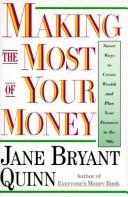
Making the most of your money
by Jane Bryant Quinn · 1991
Jane Bryant Quinn's encyclopedia is the authoritative reference for the technical questions couples face: spousal IRA contributions, survivor benefits, Medicare coordination when spouses age separately, and beneficiary designation rules. Every couple needs at least one person who has read the relevant sections of this book before finalizing their retirement plan.


Get notified when our book picks change.
Set it once. We'll email you when a pick worth knowing about changes — no checking back.
Questions about this list
How should couples coordinate Social Security claiming decisions?
The higher earner's claiming age is the most important decision because the surviving spouse will inherit that benefit. Delaying the higher earner's claim to 70 maximizes the survivor benefit, which can be a significant difference over a long retirement. The lower earner may claim earlier if income is needed. "Making the Most of Your Money" covers the spousal benefit mechanics in detail.
What happens when spouses want to retire at different times?
This is more common than most retirement books acknowledge. The working spouse continues contributing to the household income and benefits while the retired spouse begins drawing down savings or taking Social Security. Key issues include healthcare coverage for the retired spouse (if under 65), whether the still-working spouse can fund both retirement accounts, and how to adjust the withdrawal rate on the shared portfolio. Bach's "Smart Couples Finish Rich" addresses the communication framework for this transition.
How do couples handle healthcare costs between early retirement and Medicare?
If one spouse is still working and has employer coverage, the retired spouse can often stay on that plan — typically the most cost-effective option. If both have retired before 65, ACA marketplace coverage is the main alternative. Keeping household taxable income below certain thresholds can qualify couples for significant premium subsidies. This is one area where the sequence of retirement matters financially, and it's worth modeling both scenarios before the first spouse exits the workforce.