
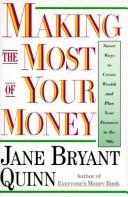
Making the most of your money

Curated by Brian Kim, CPA — every pick gets a plain-English summary and the key takeaways.
Brian Kim, CPA · 2.89M YouTube Subscribers →What this book actually teaches
- 01Financial security comes from mastering the basics — insurance, debt management, savings discipline — before pursuing investment returns.
- 02Quinn consistently argues that emergency savings and adequate insurance coverage must precede portfolio construction, not follow it.
- 03Index funds and dollar-cost averaging are the investment default; stock-picking is treated as an optional upgrade, not the core strategy.
- 04The whole-life-versus-term insurance analysis cuts through commission-driven advice and gives a clear framework for evaluating coverage needs.
- 05Productive debt (mortgage, education) and destructive debt (credit card balances) are meaningfully different — treating them identically is a planning error.
What's in this book
Jane Bryant Quinn's 1991 comprehensive personal finance guide argues that financial security is not the product of sophisticated investing but of systematic, disciplined management of the basics: insurance, debt, savings habits, and retirement planning done correctly over time. Quinn, then a nationally syndicated finance columnist, writes the book as a reference guide that adults can return to at each life stage.
The scope is deliberately broad. Separate sections cover checking and savings accounts, credit cards and debt management, home buying, life and health insurance, investing fundamentals (stocks, bonds, mutual funds), retirement accounts, and estate planning basics. Each section gives Quinn's opinion on the best product in each category, not just a neutral description of options. This opinionated approach is the book's main differentiator from comparable encyclopedia-style personal finance references.
The investment chapters are more conservative than the title might suggest. Quinn emphasizes index funds and dollar-cost averaging over stock-picking, argues against timing the market, and consistently frames investing as subordinate to the prior question of whether you have adequate emergency savings and insurance coverage. The sequencing — fix the foundation before building the portfolio — is sound and often inverted in books that lead with stock selection.
The insurance and debt sections are particularly strong. Quinn's analysis of whole life versus term insurance, and her framework for evaluating how much coverage is actually necessary, is clear and cuts through the commission-driven advice that dominated the industry at the time. The debt chapter distinguishes productive borrowing (mortgage, education) from destructive borrowing (credit card revolving balances) with appropriate nuance.
Where it falls short
the 1991 edition is significantly dated. Interest rates, tax law, insurance products, and retirement account rules have all changed substantially. Specific product recommendations and numbers need updating. The book's length (over 900 pages) can work against its usefulness as a quick reference — readers in a hurry will struggle to navigate it. Some sections on banking products reflect a pre-internet landscape where comparison shopping was genuinely difficult.
The verdict
a landmark comprehensive personal finance reference that established Quinn as a trusted voice in the field. The core framework remains sound; the specific product guidance requires updating against current law and market conditions.
Read next

For anyone whose financial education was "get a good job and save" — the book is most valuable for first-time readers…
Buy on Amazon →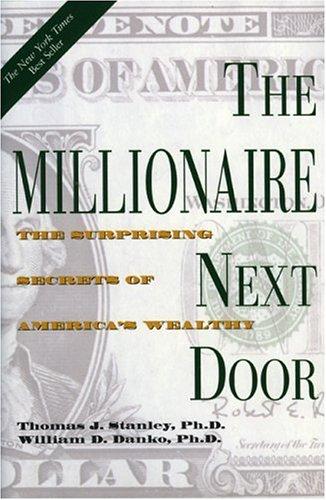
For anyone who confuses high income with wealth, or who feels behind because their lifestyle doesn't look like the we…
Buy on Amazon →
Anyone who earns enough to make discretionary spending choices but suspects their spending is not generating proporti…
Buy on Amazon →
Households in active consumer-debt distress who need a non-negotiable shared script. Not for investors already past B…
Buy on Amazon →About Jane Bryant Quinn
Read more from Jane Bryant Quinn and explore the full bibliography on ClearValue Books.
View Jane Bryant Quinn's page →Get an email if our take on Making the most of your money changes.
We re-review our picks. We'll email you if Making the most of your money's ranking or review changes — no checking back.

Ready to read Making the most of your money?
Buy the edition we recommend on Amazon.
Buy on Amazon →