
Best Retirement Books for Late Starters (2026).
You started late. These books cut the noise and tell you what actually moves the needle now.
Starting serious retirement saving in your 40s or 50s is more common than the financial media implies, and it's far from hopeless — but the strategy is different from what worked at 25. Catch-up contributions let workers 50 and older put an extra $7,500 into a 401(k) and an extra $1,000 into an IRA each year. Social Security optimization becomes one of the highest-leverage decisions available: delaying from 62 to 70 can increase your monthly benefit by 76%. Expense reduction often closes the gap faster than investment returns. And setting realistic expectations matters — trying to make up 20 years of missed compounding through high-risk bets is how late starters turn a recoverable situation into an unrecoverable one. The books here were chosen because they give honest, practical guidance to people with less runway, without the condescension or panic that most "late saver" content can't resist.
Books must directly address late-start scenarios: catch-up contribution mechanics, compressed savings timelines, Social Security optimization strategies, or realistic expectation-setting for people retiring in 10 to 20 years. Generic wealth-building books that assume a 30-year horizon were excluded in favor of titles with specific late-start applicability.
The list, in order
- №1◈ Longevity Math
The Truth About Your Future
by Ric Edelman
Ric Edelman addresses how dramatically longer lifespans change retirement math — including for people who started late. His argument that conventional retirement planning is built for a world where people die at 75 is a useful reframe: a 55-year-old today may have 35 years of retirement to fund, which changes both the urgency and the strategy.
- №2◈ Behavioral Guardrails
Unshakeable
by Tony Robbins
◈CanonTony Robbins synthesizes advice from top money managers into an accessible playbook, with particular emphasis on not letting market downturns wipe out a late-stage accumulation strategy. The behavioral coaching is useful for late starters who may be tempted to take on excess risk to "catch up" — a move that frequently backfires.
- №3◈ Savings Rate Reality Check
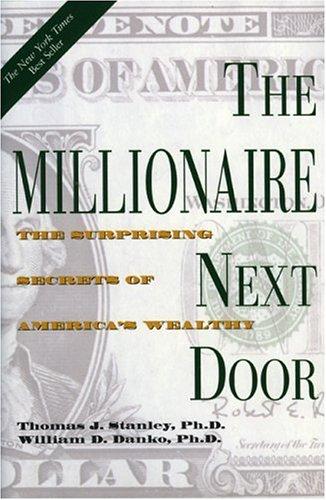
The Millionaire Next Door
by Thomas Stanley · 1996
◈Canon★Brian's PickStanley and Danko's research on wealth-building patterns is especially useful for late starters because it reframes the problem: the biggest lever available to most people isn't investment return, it's savings rate. The book's data on high-income people who save nothing versus modest earners who retire comfortably is a bracing corrective to return-chasing.
- №4◈ Comprehensive Reference
Making the most of your money
by Jane Bryant Quinn · 1991
Jane Bryant Quinn's comprehensive personal finance encyclopedia is the single best reference for late starters who need to understand Social Security timing, catch-up contribution rules, IRA vs. Roth decisions, and Medicare enrollment — all in one place. It's dense but authoritative, and late starters can't afford to guess on any of these decisions.
- №5◈ Income Planning
Someday rich
by Timothy Noonan
Timothy Noonan and Matt Smith focus on the income-replacement problem rather than the accumulation problem — how much of your pre-retirement income do you actually need to maintain your lifestyle? For late starters, this lens is more actionable than abstract net-worth targets and helps prioritize which levers to pull with limited time remaining.



Get notified when our book picks change.
Set it once. We'll email you when a pick worth knowing about changes — no checking back.
Questions about this list
Is it too late to retire comfortably if I'm starting to save seriously at 50?
It depends heavily on your income, expenses, and expected Social Security benefit. Starting at 50 with 15 working years ahead, maximizing catch-up contributions (an extra $7,500/year in a 401(k) at 50+), and delaying Social Security to 70 can close more of the gap than most people expect. The math is harder but rarely hopeless. "The Truth About Your Future" and "Making the Most of Your Money" both model realistic late-start scenarios.
What is the biggest mistake late-start savers make?
Taking on too much investment risk to accelerate growth. Concentrating in individual stocks, crypto, or leveraged funds in an attempt to "catch up" is the most common way late starters turn a manageable shortfall into a crisis. A market crash in your late 50s with too little diversification is nearly impossible to recover from before retirement. The books on this list — particularly "Unshakeable" — are explicit about this trap.
How much does delaying Social Security actually matter for late starters?
Significantly. Claiming at 62 versus 70 can mean a 76% difference in monthly benefit for the same earnings record. For a late starter with modest savings, Social Security optimization is often the highest single-dollar-value decision available. "Making the Most of Your Money" has one of the clearest explanations of the break-even math and spousal benefit coordination.