
Best Retirement Books for Early Retirement (2026).
The books that actually answer the hard questions about leaving work decades early.
The FIRE movement — Financial Independence, Retire Early — has moved from Reddit fringe to mainstream aspiration. But pulling it off requires more than a high savings rate. Early retirees face a 40- to 50-year portfolio runway, which means safe withdrawal rates that work for a 30-year horizon may not work for theirs. Healthcare before Medicare eligibility at 65 is often the biggest line item nobody budgets correctly. And then there's the identity question: work structures most people's time, social lives, and sense of purpose. Quitting at 40 or 45 leaves a long stretch to fill intentionally. The books on this list tackle all four layers — the math of early withdrawal, the healthcare gap, the sequence-of-returns risk that can wreck an otherwise sound plan, and the non-financial side of life after work. Read them in roughly this order before you hand in your notice.
We selected books that directly address early retirement challenges — not just generic personal finance advice repackaged with a FIRE label. Each pick must cover at least two of: safe withdrawal math, early healthcare planning, sequence-of-returns risk, or the psychological/lifestyle side of leaving work young. Books that assume a standard 65-year-old retirement timeline were excluded.
The list, in order
- №1◈ The FIRE Foundation
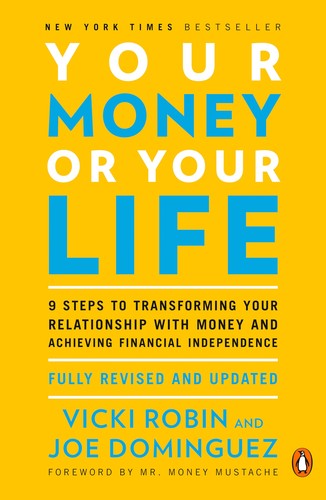
Your Money or Your Life: 9 Steps to Transforming Your Relationship with Money and Achieving Financial Independence
by Vicki Robin · 1992
◈CanonThe original FIRE manifesto. Vicki Robin's framework for calculating your "real hourly wage" and trading life energy for money is the philosophical foundation every early retiree needs before running the numbers. It reframes the question from "how much do I need?" to "what is enough?" — which is actually the harder question.
- №2◈ Portfolio Construction
The Simple Path to Wealth
by Jl Collins · 2016
◈Canon★Brian's PickJL Collins distills index-fund investing into its simplest form, including a frank discussion of withdrawal rates and why a 4% rule might be too aggressive for a 50-year horizon. His stock series logic is easy to apply without a financial advisor, which matters when you're decades away from traditional retirement milestones.
- №3◈ Accumulation Strategy
Set for life
by Scott Trench
Scott Trench writes specifically for people trying to reach financial independence in their 30s. The house-hacking and savings acceleration strategies are more aggressive than most FIRE books, but the math is honest. Best read during the accumulation phase, not after you've already quit.
- №4◈ Life After Work
The new good life
by John Robbins
John Robbins addresses what to do with early retirement once you have it. The book challenges the assumption that more spending equals more satisfaction and offers a framework for building a meaningful life on a lean budget. Essential reading for anyone worried about the identity and purpose gaps that early retirement can expose.
- №5◈ Downside Protection
The resilient investor
by Hal Brill
Early retirees face sequence-of-returns risk more acutely than anyone — a bad first decade of withdrawals can permanently impair a portfolio. This book's three-zone investment framework (financial, personal, tangible assets) provides a concrete approach to building a portfolio resilient enough to survive a bear market in year two of retirement.


Get notified when our book picks change.
Set it once. We'll email you when a pick worth knowing about changes — no checking back.
Questions about this list
What is the safe withdrawal rate for early retirement?
The traditional 4% rule was designed for a 30-year retirement. For a 40- to 50-year horizon, many financial planners recommend 3% to 3.5% to reduce the risk of running out of money. Your actual safe rate depends on your asset allocation, spending flexibility, and whether you have any part-time income. "The Simple Path to Wealth" and "The Resilient Investor" both address this in practical terms.
How do early retirees handle health insurance before Medicare?
Most early retirees rely on ACA marketplace plans until Medicare kicks in at 65. Keeping taxable income low through careful Roth conversion ladders or capital gains harvesting can significantly reduce premiums via ACA subsidies. Budget this line item carefully — healthcare is often the largest and most volatile expense in early retirement.
How do you avoid boredom or loss of purpose after retiring early?
This is the question most FIRE books underserve. Work provides structure, social connection, and identity — all of which need intentional replacements. "Your Money or Your Life" and "The New Good Life" both address the lifestyle design side. Many early retirees find that part-time consulting, passion projects, or volunteering fill the gap better than pure leisure.