

The resilient investor

Curated by Brian Kim, CPA — every pick gets a plain-English summary and the key takeaways.
Brian Kim, CPA · 2.89M YouTube Subscribers →What this book actually teaches
- 01The Resilient Investing Map organizes strategy across three asset zones (personal/local, marketplace, tangible) and three time horizons (near, mid, long-term), creating a 3x3 framework that deliberately includes non-financial assets alongside conventional portfolio holdings.
- 02The book's most distinctive argument is that time invested in skills, community relationships, and local systems constitutes genuine investment — one that retains value in disruption scenarios where financial markets underperform or become inaccessible.
- 03Scenario planning is structural to the framework: the authors evaluate how different zones perform across four macro futures (sustained growth, green innovation, breakdown/regeneration, systems transformation) rather than assuming a single growth baseline.
- 04The framework is philosophically coherent but light on quantitative guidance — readers seeking specific allocation percentages, return expectations, or risk-adjusted comparisons across zones will need to develop those specifics with professional help.
- 05The socially responsible investing (SRI) orientation of the authors shapes the marketplace investment chapters; the ongoing debate about whether SRI screening delivers comparable returns after fees is not fully engaged.
What's in this book
The Resilient Investor (2015) by Hal Brill, Michael Kramer, and Christopher Peck — co-founders and principals at Natural Investments, a socially responsible investing firm — argues that conventional financial planning is too narrow to prepare investors for the range of futures that are actually plausible. The book's core argument is that true investment resilience requires diversifying across three zones (personal/local, marketplace, and tangible assets) and three time horizons (near-term, mid-term, and long-term/future generations), creating a 3x3 grid — the Resilient Investing Map — that the authors use as the organizing framework throughout.
The personal/local zone covers investments in skills, health, relationships, and local community — assets that retain value in scenarios where financial markets underperform or become inaccessible. The marketplace zone covers conventional financial assets: stocks, bonds, real estate investment trusts, and the socially responsible investment (SRI) products that the authors specialize in professionally. The tangible assets zone covers physical holdings — land, equipment, renewable energy infrastructure, gold, and other durable goods — that provide a store of value outside the financial system. The three time horizons layer urgency and durability onto these zones: near-term strategies focus on liquidity and stability, mid-term strategies build toward specific goals, and long-term strategies address legacy and systemic contribution.
The book's most original contribution is the inclusion of personal and community investments alongside financial ones as legitimate portfolio considerations. For most financial planning frameworks, "investment" means financial assets. Brill, Kramer, and Peck make the case that time invested in community relationships, skill development, local food systems, and neighborhood resilience provides real returns — including returns that are more durable than financial assets in disruption scenarios. This is not a fringe position; it echoes academic work on social capital and resilience economics, though the book does not engage that literature formally.
Scenario planning is a structural element of the framework. The authors identify four plausible macro futures — sustained growth (conventional scenario), efficiency and innovation (green growth), breakdown and regeneration (disruption followed by recovery), and evolutionary transformation (fundamental systems change) — and evaluate how each zone of the Resilient Investing Map performs across scenarios. This scenario-based approach is more intellectually honest than most investing frameworks, which implicitly assume a continued growth baseline.
The weaknesses are primarily about depth. The book is philosophically coherent and persuasive as a reframing exercise but light on quantitative guidance. Readers who want specific asset allocation percentages, return expectations, or risk-adjusted comparisons across the zones will not find them. The tangible asset and community investment sections are genuinely valuable as concepts but difficult to translate into concrete portfolio actions without professional guidance. The SRI orientation of the authors means the marketplace investment chapters lean toward values-based screening without fully engaging the ongoing debate about whether SRI funds deliver comparable returns after fees.
For investors who feel that conventional financial planning is inadequate preparation for the range of economic and environmental scenarios ahead — and who are open to a framework that counts community relationships and skill development alongside financial assets — this book provides a well-structured alternative lens.
Read next

For anyone whose financial education was "get a good job and save" — the book is most valuable for first-time readers…
Buy on Amazon →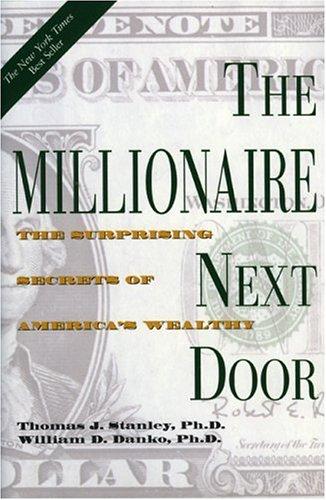
For anyone who confuses high income with wealth, or who feels behind because their lifestyle doesn't look like the we…
Buy on Amazon →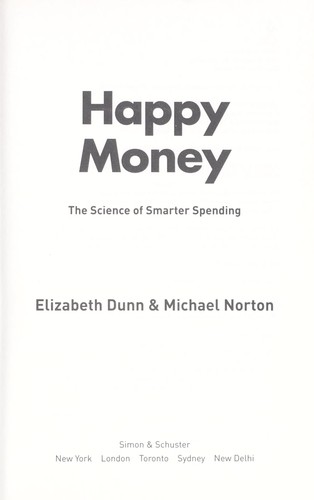
Anyone who earns enough to make discretionary spending choices but suspects their spending is not generating proporti…
Buy on Amazon →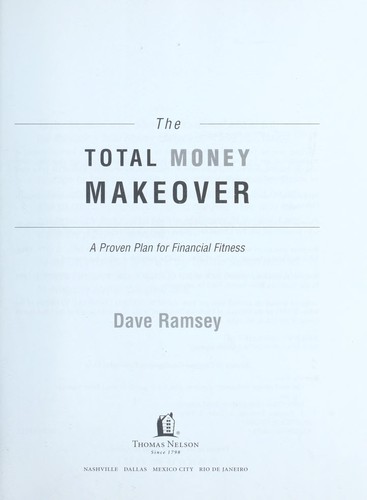
Households in active consumer-debt distress who need a non-negotiable shared script. Not for investors already past B…
Buy on Amazon →About Hal Brill
Read more from Hal Brill and explore the full bibliography on ClearValue Books.
View Hal Brill's page →Get an email if our take on The resilient investor changes.
We re-review our picks. We'll email you if The resilient investor's ranking or review changes — no checking back.

Ready to read The resilient investor?
Buy the edition we recommend on Amazon.
Buy on Amazon →