

A fine mess

Curated by Brian Kim, CPA — every pick gets a plain-English summary and the key takeaways.
Brian Kim, CPA · 2.89M YouTube Subscribers →What this book actually teaches
- 01The U.S. tax code's complexity is a political choice, not an inevitability — most peer nations use broader bases, lower rates, and near-zero compliance burden.
- 02Return-free filing (used in Germany, Japan, the UK, and others) eliminates most individual compliance costs; the U.S. has blocked it largely because of lobbying from tax software companies.
- 03A value-added tax (VAT) is structurally harder to evade than a sales tax because every link in the supply chain documents the transaction above it — relevant for any business operating internationally.
- 04The mortgage interest deduction, employer health exclusion, and dozens of other carve-outs each have powerful constituencies; together they keep the base narrow and force rates higher than they'd need to be on a clean system.
- 05Small-business owners and the self-employed bear the highest per-dollar compliance cost in the U.S. system — the burden that falls lightest on large corporations with tax departments falls heaviest on operators running lean.
What's in this book
T. R. Reid's 2017 book is a foreign correspondent's tour of tax systems around the world, written in direct response to a deceptively simple question: why does the United States make taxes so painful, so expensive, and so politically radioactive when dozens of other wealthy democracies have solved the same problems more cleanly? Reid visited Australia, Canada, the UK, France, Germany, New Zealand, Japan, and several others — not as an economist constructing a comparative model, but as a journalist sitting down with taxpayers, tax attorneys, finance ministers, and ordinary citizens to understand what actually happens on the ground.
The book opens with a diagnosis of what Reid calls the "fine mess" — the U.S. tax code is simultaneously complex, riddled with exceptions and carve-outs, inefficient at raising revenue, and politically impossible to simplify because every deduction and credit has a constituency that will fight to keep it. The U.S. spends more on tax compliance (accounting fees, software, IRS administration) per dollar collected than almost any comparable nation. Economists across the political spectrum agree the system is badly designed; yet it never gets fixed. Reid's central argument is that this is not accidental — it is the product of specific political choices.
The comparative chapters are the core of the book. Reid profiles tax systems built around three design principles that most economists endorse and the U.S. largely ignores: broad base (taxing nearly all income with few deductions), low rates (revenue comes from the width of the base, not high marginal rates on a narrow slice), and simple compliance (many countries use return-free filing, where the government sends a pre-filled return and the taxpayer corrects it or accepts it). New Zealand's GST (goods and services tax) gets extended coverage as a model of clean design — broad, low-rate, difficult to evade. Germany and the UK handle payroll taxes and return filing in ways that cost citizens almost nothing in time or money. Japan maintains a cultural compliance ethic that keeps enforcement costs low.
Reid also profiles value-added taxes (VAT), which virtually every OECD country except the U.S. employs. He explains how VATs generate revenue efficiently and are harder to evade than sales taxes because each business in the supply chain has an incentive to document the transaction above it. The chapter on the VAT is one of the most practically illuminating in the book for business readers, because it explains a mechanism that affects every company doing international business.
The political economy chapter is honest about why reform fails in the U.S.: the complexity is not a bug but a feature for the industries (accounting, tax software, lobbying) that profit from it, and every simplification that eliminates a deduction inflicts visible pain on a constituency while spreading invisible gains across everyone else. Reid names the Mortgage Interest Deduction, the employer health insurance exclusion, and the Earned Income Tax Credit as three of the most politically protected provisions — each of them sensible in isolation, each of them a reason the base stays narrow and rates stay high.
Weaknesses
Reid is a journalist, not a tax economist, and the book does not try to quantify the trade-offs rigorously. The comparisons are illuminating but selective — countries are chosen partly because they make good stories, not because they form a statistically representative sample. Several of Reid's recommended models (New Zealand, Germany) have their own distortions and inefficiencies that don't get the same scrutiny the U.S. system receives. The 2017 Tax Cuts and Jobs Act was enacted as the book was finishing; Reid acknowledged the timing made some of his policy prescriptions feel like they were already being litigated in real time, but the structural critique remains durable.
For business owners and entrepreneurs, the most applicable section is the discussion of how other countries treat self-employment income, small-business deductions, and pass-through entities — areas where U.S. complexity is particularly high and the compliance burden falls heaviest on small operators rather than large corporations with dedicated tax departments.
Verdict
one of the most readable tax-policy books written for a general audience. It won't give you a filing strategy, but it will give you a framework for understanding why the system works the way it does — and for evaluating the claims politicians make about fixing it.
Read next
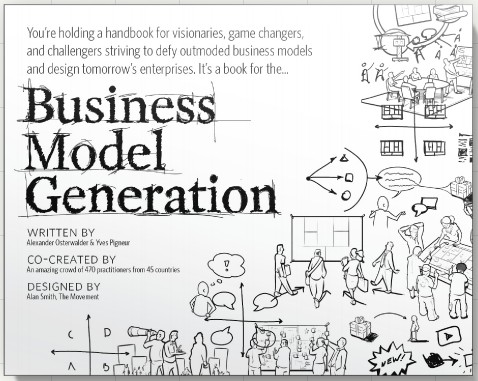
For entrepreneurs designing new ventures, corporate innovation teams working on business model transformation, MBA st…
Buy on Amazon →
Engineers, scientists, and researchers considering or early in the process of commercializing a technical innovation…
Buy on Amazon →
Small business owners — particularly those with five or more years of meaningful profitability — who want a CPA-ancho…
Buy on Amazon →
Tax professionals, policy analysts, and informed citizens who want to understand the structural case for replacing th…
Buy on Amazon →About T R Reid
Read more from T R Reid and explore the full bibliography on ClearValue Books.
View T R Reid's page →Get an email if our take on A fine mess changes.
We re-review our picks. We'll email you if A fine mess's ranking or review changes — no checking back.
