

A Guide to Continuous Improvement Transformation

Curated by Brian Kim, CPA — every pick gets a plain-English summary and the key takeaways.
Brian Kim, CPA · 2.89M YouTube Subscribers →What this book actually teaches
- 01CI initiatives fail when treated as cost-cutting projects; they survive when restructured as capability investments embedded in daily management routines.
- 02The five-phase transformation roadmap — Assessment, Foundation, Expansion, Integration, Sustainability — distinguishes between deploying CI tools and building CI capability.
- 03Leader behavior is the single highest-leverage variable: if managers respond to problem visibility with blame, teams learn to hide problems and the entire system produces theater.
- 04Gemba walks (going to where work happens) and visual management at the point of work — not executive dashboards — are the operational mechanics that keep CI real rather than performative.
- 05Track process metrics (throughput, defect rate, lead time, improvement ideas per quarter) in addition to financial outcomes; financial metrics lag too far behind to guide daily decisions.
What's in this book
Aristide van Aartsengel and Selahattin Kurtoglu's book is a practitioner's manual for embedding continuous improvement (CI) as a durable organizational capability rather than a one-time project. The authors draw on Lean, Six Sigma, and the Toyota Production System but frame the argument around transformation — the claim that sustainable CI requires changes to culture, leadership behavior, and management infrastructure, not just deployment of tools.
The book is structured as a staged implementation guide. The opening chapters diagnose why CI initiatives fail: they are launched as cost-cutting campaigns rather than capability investments, they are project-managed to a deadline rather than woven into daily management routines, and they depend on a small number of certified practitioners (Black Belts, Lean experts) rather than distributing problem-solving skills broadly. The authors argue that organizations that "do Lean" or "do Six Sigma" as a program are almost certain to see gains evaporate within three years. Organizations that transform — restructuring how managers spend their time, how teams surface problems, how improvement is measured and rewarded — hold their gains and compound them.
The core model is a five-phase transformation roadmap: (1) Assessment — establish a baseline by measuring current process performance, waste levels, and cultural readiness; (2) Foundation — train leadership on CI principles and restructure management routines before deploying any tools on the floor; (3) Expansion — run structured improvement events (kaizen, value-stream mapping, DMAIC projects) on priority processes while building internal coaches; (4) Integration — embed CI into hiring, performance management, budgeting, and strategic planning so improvement is not a parallel track but the operating system; (5) Sustainability — transition from external coaching to internal CI capability with ongoing measurement cadences.
The leadership chapters are the most distinctive contribution. Van Aartsengel and Kurtoglu are explicit that CI transformation fails when senior leaders sponsor it verbally but don't change their own behavior — specifically, how they respond when a team surfaces a problem. If leaders respond to problem visibility with blame rather than curiosity, teams learn to hide problems, and the CI system produces theater rather than real data. The authors lay out specific changes to leader standard work: daily or weekly gemba walks (going to where work happens), structured problem-escalation routines, and a shift from reviewing results to reviewing process capability.
The measurement framework is practical. The book specifies which metrics to track at each phase (throughput, defect rate, lead time, employee-generated improvement ideas per quarter) and which to avoid — particularly financial metrics alone, which lag too far behind process reality to guide daily decisions. The authors push for visual management systems (dashboards at the point of work, not in the executive suite) as a forcing function for transparency.
Weaknesses
the book is dense and structured as a reference manual rather than a narrative read. Readers looking for stories and case studies will find fewer than in comparable Lean books like "The Goal" or "Learning to See." Some chapters on tool deployment (value-stream mapping, DMAIC templates) cover familiar ground without adding significantly to what's already in Lean/Six Sigma training materials. The writing is functional rather than compelling, and the staged roadmap, while logically sound, can feel prescriptive for organizations whose starting conditions don't fit the assumed baseline. Critics note that the transformation model is aspirationally described at the enterprise level but the examples skew toward manufacturing; service-sector and knowledge-work organizations will need to adapt the tool set more than the book acknowledges.
For small and mid-size business owners, the most applicable section is the Foundation phase — specifically the diagnosis of why CI programs fail and the specific changes to management routines that separate organizations that sustain gains from those that don't. The cultural and leadership material is more transferable across industries than the tool chapters.
Verdict
a rigorous, comprehensive CI implementation guide best suited to operations managers and CI practitioners who want a structured transformation roadmap. Less useful as a first book on Lean or Six Sigma — read "The Goal," "Learning to See," or "The Lean Startup" first, then return to this for implementation scaffolding.
Read next
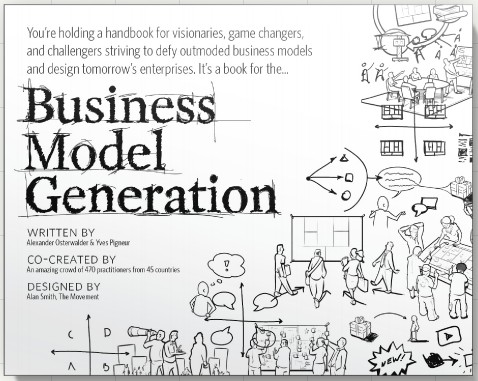
For entrepreneurs designing new ventures, corporate innovation teams working on business model transformation, MBA st…
Buy on Amazon →
Engineers, scientists, and researchers considering or early in the process of commercializing a technical innovation…
Buy on Amazon →
Small business owners — particularly those with five or more years of meaningful profitability — who want a CPA-ancho…
Buy on Amazon →
Tax professionals, policy analysts, and informed citizens who want to understand the structural case for replacing th…
Buy on Amazon →About Aristide Van Aartsengel
Read more from Aristide Van Aartsengel and explore the full bibliography on ClearValue Books.
View Aristide Van Aartsengel's page →Get an email if our take on A Guide to Continuous Improvement Transformation changes.
We re-review our picks. We'll email you if A Guide to Continuous Improvement Transformation's ranking or review changes — no checking back.
Across the site
Featured in lists

Ready to read A Guide to Continuous Improvement Transformation?
Buy the edition we recommend on Amazon.
Buy on Amazon →