

Bricks to clicks

Curated by Brian Kim, CPA — every pick gets a plain-English summary and the key takeaways.
Brian Kim, CPA · 2.89M YouTube Subscribers →What this book actually teaches
- 01Incumbent retailers' real assets — logistics, supplier relationships, brand trust — were durable advantages dot-com pure-plays couldn't replicate; the strategic error was treating those assets as liabilities.
- 02Spinning the online unit off as a separate startup disconnected it from the parent's core advantages and usually created a weaker competitor on both sides.
- 03Channel conflict (online vs. in-store pricing and promotions) needs explicit resolution before launch, not after — unresolved, it stalls the initiative from the inside.
- 04Using existing stores and warehouses as fulfillment nodes for online orders tends to produce better unit economics than building parallel e-commerce-only infrastructure, especially for grocery and general merchandise.
- 05The organizational dynamics of incumbents launching digital channels — internal politics, talent competition, capital allocation — predict outcomes as strongly as the technology decisions do.
What's in this book
Charles Trevail's central argument is that established "bricks" retailers possessed durable assets — supplier relationships, logistics infrastructure, physical locations, and brand trust — that dot-com-only competitors lacked, and that the right move in 2000 was to build integrated "clicks" capability on top of those assets rather than abandon them or let pure-play e-commerce brands dictate the terms. Written at the peak of dot-com mania, the book is a corrective to the prevailing assumption that incumbent retailers were structurally doomed.
Trevail organizes his argument around three tensions that every bricks-and-mortar business had to resolve. First, channel conflict: adding an online channel that undercuts your existing retail partners or your own stores creates internal warfare that can stall the initiative before it ships. He documents how retailers who resolved this tension explicitly — setting clear rules for which products, prices, and promotions lived in which channel — moved faster than those who let it fester. Second, brand coherence: the temptation in 1999-2000 was to spin off the online unit as a separate startup (Barnes & Noble did this with Barnesandnoble.com; Kmart did it with BlueLight.com) to attract venture capital and retain talent with equity. Trevail argues this structurally detached the online operation from the parent's core advantages, creating a weaker competitor instead of a stronger one. Third, operational integration: inventory visibility, returns handling, and customer service were the unglamorous work that pure-play dot-coms systematically underinvested in, and Trevail shows that incumbents who connected their online front-end to existing warehouse and logistics infrastructure achieved better unit economics from the start.
The second half of the book is case-study-driven — Tesco, Boots, and several U.S. retailers illustrate how the integration decisions played out operationally. Tesco's grocery e-commerce model, which leveraged existing stores as fulfillment nodes rather than building dedicated e-commerce warehouses, is the fullest example: a lower-capital approach that turned out to be right for the economics of grocery delivery in a way that pure-play Webvan's warehouse-first model was not.
For a reader in 2026, the most durable content is the strategic logic behind channel integration and the organizational dynamics of incumbents launching adjacent digital channels. The specific tactical content (search engine optimization circa 2000, early payment gateway decisions, WAP mobile) has aged out. But the pattern — established businesses underestimating their own assets while overestimating the threat from capital-light digital entrants — has replayed in streaming, fintech, and direct-to-consumer e-commerce often enough that Trevail's framework retains diagnostic value.
Who this is for: small business owners thinking through how to integrate a digital sales channel with an existing physical or service-based operation, and operators who want a first-principles framing for channel-conflict decisions before reading the post-2010 omnichannel literature.
Weaknesses
the book is a document of a specific moment — written before the dot-com crash confirmed most of its predictions. The case studies are largely drawn from large UK and U.S. retail chains; the applicability to SMBs is inferential rather than demonstrated. Trevail's writing is competent but the book is denser than it needs to be, and the chapter structure makes it easy to read selectively rather than cover-to-cover. The 25-year-old date is the biggest constraint: readers should treat it as historical context rather than a how-to, and layer it with post-2015 omnichannel thinking for current decision-making.
Read next
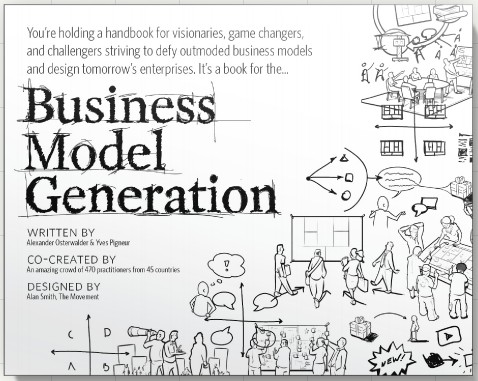
For entrepreneurs designing new ventures, corporate innovation teams working on business model transformation, MBA st…
Buy on Amazon →
Engineers, scientists, and researchers considering or early in the process of commercializing a technical innovation…
Buy on Amazon →
Small business owners — particularly those with five or more years of meaningful profitability — who want a CPA-ancho…
Buy on Amazon →
Tax professionals, policy analysts, and informed citizens who want to understand the structural case for replacing th…
Buy on Amazon →About Ed Mcmahon
Read more from Ed Mcmahon and explore the full bibliography on ClearValue Books.
View Ed Mcmahon's page →Get an email if our take on Bricks to clicks changes.
We re-review our picks. We'll email you if Bricks to clicks's ranking or review changes — no checking back.
