

Building cross-cultural competence

Curated by Brian Kim, CPA — every pick gets a plain-English summary and the key takeaways.
Brian Kim, CPA · 2.89M YouTube Subscribers →What this book actually teaches
- 01Cultural differences are tensions to be reconciled, not problems to be minimized or compromised away — reconciliation captures the strengths of both cultural poles rather than conceding from both.
- 02The seven Trompenaars/Hampden-Turner dimensions (Universalism/Particularism, Individualism/Communitarianism, etc.) give managers a diagnostic vocabulary for friction that would otherwise be labeled personality conflict or bad faith.
- 03Universalism vs. Particularism — whether rules apply equally or relationships modify application — is the dimension that creates the most visible day-to-day friction in cross-cultural business operations.
- 04Sequencing cultural approaches (apply one first, evaluate outcome, then layer the complementary approach) typically produces better results than imposing one culture's defaults or splitting the difference.
- 05Cross-cultural competence develops through experience; frameworks like this accelerate the pattern-recognition process but can't substitute for it.
What's in this book
Charles Hampden-Turner and Fons Trompenaars — the researchers behind the seven-dimension cultural-values model that became a standard framework in international management — use this book to move beyond their earlier descriptive work (Riding the Waves of Culture) toward a prescriptive one: how do managers and organizations actually reconcile cultural differences rather than just catalog them? The central thesis is that cultural differences are not problems to be minimized but tensions to be "reconciled" — synthesized into approaches that capture the strengths of both poles and avoid the weaknesses of either extreme.
The book's architecture is built around seven value dimensions — Universalism vs. Particularism, Individualism vs. Communitarianism, Specific vs. Diffuse, Neutral vs. Emotional, Achievement vs. Ascription, Sequential vs. Synchronous time, and Internal vs. External environment control. These will be familiar to anyone who has read Trompenaars' prior work. What Hampden-Turner adds here is a reconciliation framework: for each dimension, rather than declaring one pole correct or asking people to "compromise" (which typically means both sides concede without gaining), the goal is to find approaches where the tension becomes generative — where, for example, universal rules are designed with enough flexibility that particular relationships can be honored within them.
The operational core of the book is a set of reconciliation tools: dilemma worksheets, cultural-difference maps, and a method for sequencing value-pole applications (apply one cultural approach first, evaluate, then layer the complementary approach) rather than imposing one culture's defaults. The authors apply these to real management scenarios — performance review processes that work across individualist and communitarian cultures, negotiation styles across achievement and ascription-oriented counterparts, project management across sequential and synchronous time orientations.
For small business owners working with international suppliers, franchise partners, or immigrant-heavy workforces, the most immediately applicable content is in the chapters on Universalism/Particularism ("do the rules apply to my friend?") and Achievement/Ascription ("why does the room defer to the most senior person rather than the most data-literate person?"). These chapters move from abstract to concrete faster than the rest of the book.
Who this is for: managers leading cross-cultural teams, business owners expanding internationally or working with immigrant communities, and anyone who has experienced repeated friction with international counterparts and wants a diagnostic vocabulary for what's actually happening.
Weaknesses
the reconciliation framework, while intellectually compelling, is procedurally demanding — the dilemma worksheets and cultural-mapping exercises require facilitator skill and participant buy-in that most operating environments won't provide. The writing is dense and occasionally academic; readers looking for quick tactical guidance will find the pace frustrating. Trompenaars' dimensional model has also faced methodological criticism (Hofstede's competing framework covers similar territory with a different theoretical basis and more extensive survey data), and the reconciliation approach, while directionally right, underspecifies what the reconciled solution actually looks like in practice. Cultural competence also develops through experience more than frameworks — the book is a useful scaffold, but it can't substitute for the pattern-recognition built through actual cross-cultural work.
Read next
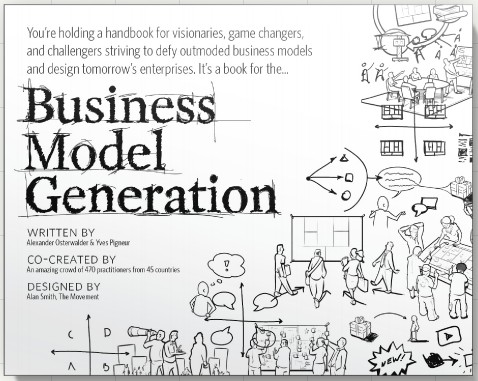
For entrepreneurs designing new ventures, corporate innovation teams working on business model transformation, MBA st…
Buy on Amazon →
Engineers, scientists, and researchers considering or early in the process of commercializing a technical innovation…
Buy on Amazon →
Small business owners — particularly those with five or more years of meaningful profitability — who want a CPA-ancho…
Buy on Amazon →
Tax professionals, policy analysts, and informed citizens who want to understand the structural case for replacing th…
Buy on Amazon →About Charles Hampden Turner
Read more from Charles Hampden Turner and explore the full bibliography on ClearValue Books.
View Charles Hampden Turner's page →Get an email if our take on Building cross-cultural competence changes.
We re-review our picks. We'll email you if Building cross-cultural competence's ranking or review changes — no checking back.

Ready to read Building cross-cultural competence?
Buy the edition we recommend on Amazon.
Buy on Amazon →