

Business Process Reengineering

Curated by Brian Kim, CPA — every pick gets a plain-English summary and the key takeaways.
Brian Kim, CPA · 2.89M YouTube Subscribers →What this book actually teaches
- 01BPR's high failure rates reflect implementation failures, not methodological flaws — the original Hammer-Champy framework was sound, but was applied without adequate attention to change management, technology readiness, and organizational capacity to absorb radical change.
- 02IT should enable redesigned processes, not define them — the common failure pattern is ERP implementations that impose a generic process model rather than supporting a process designed for specific business outcomes.
- 03BPR-style radical redesign is appropriate for crisis-triggered transformation or major technology discontinuities; incremental improvement approaches are usually more appropriate for organizations not facing those conditions.
- 04The book synthesizes the original BPR methodology with Davenport's process innovation framework, lean principles, and Six Sigma to provide a more complete picture of the process improvement toolkit than any single methodology offers.
- 05The case studies and IT sections are dated relative to current cloud ERP and low-code environments; digital-native businesses and platform companies will need to adapt the frameworks significantly.
What's in this book
Business Process Reengineering by Sanjay Mohapatra, published by Springer in 2013, is an academic-practitioner text that attempts to synthesize the original BPR movement — pioneered by Michael Hammer and James Champy's 1993 Reengineering the Corporation — with subsequent critiques, refinements, and case evidence from two decades of real-world implementation. Mohapatra, a professor of information systems and management, frames the book as both a theoretical grounding in BPR methodology and a practical guide to the conditions under which radical process redesign succeeds versus the conditions under which it fails.
The book's central argument is that BPR's reputation for high failure rates — frequently cited studies from the 1990s put failure rates between 50% and 70% — reflects implementation failures rather than methodological flaws. Mohapatra's thesis is that the original Hammer-Champy framework was sound as a design methodology but was applied without adequate attention to change management, technology readiness, and the organizational conditions that determine whether radical redesign can be absorbed. Where BPR succeeded, it did so because the redesign was paired with genuine leadership commitment, a clear connection between process change and business performance metrics, and a recognition that people and culture were the limiting variables, not process diagrams.
The book covers BPR methodology in detail: the triggers for reengineering initiatives (competitive crisis, technology discontinuities, strategic repositioning), the process identification and scoping work that precedes redesign, the "as-is" and "to-be" analysis cycle, and the implementation and change management phases. Mohapatra draws on Hammer and Champy's original work but integrates it with subsequent process management thinking — including Davenport's process innovation framework, lean manufacturing principles, and Six Sigma quality methodology — to provide a more complete picture of the process improvement toolkit and when BPR-style radical redesign is appropriate versus when incremental improvement is the right choice.
The relationship between BPR and information technology receives sustained attention. Mohapatra argues that IT should be an enabler of redesigned processes, not the driver — a reversal of the common pattern where ERP implementations define the process rather than supporting a process that was designed for business outcomes first. The case studies in the book, drawn primarily from manufacturing and services industries, illustrate both the value of this sequencing and the costs when IT-centric implementations run in reverse.
Who this is for: management students, operations managers, and business analysts who want a theoretically grounded treatment of process reengineering methodology that takes the implementation failures seriously, and practitioners who are choosing between BPR and incremental improvement approaches for a significant transformation initiative.
Weaknesses
as an academic text, the book's prose is denser and more citation-heavy than practitioners typically want from a methodology guide. The case studies are well-documented but tend toward manufacturing and back-office service operations, limiting direct applicability for digital-native businesses, platform companies, or organizations where the primary processes are knowledge work rather than transaction processing. Some sections covering IT integration are dated relative to current cloud ERP, low-code platforms, and API-driven integration architectures.
Verdict
a methodologically rigorous treatment of BPR that takes implementation failures seriously and provides a grounded framework for deciding when radical process redesign is appropriate; stronger as a graduate course text than as a practitioner handbook.
Read next
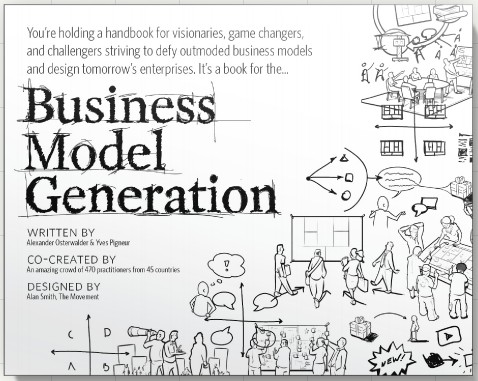
For entrepreneurs designing new ventures, corporate innovation teams working on business model transformation, MBA st…
Buy on Amazon →
Engineers, scientists, and researchers considering or early in the process of commercializing a technical innovation…
Buy on Amazon →
Small business owners — particularly those with five or more years of meaningful profitability — who want a CPA-ancho…
Buy on Amazon →
Tax professionals, policy analysts, and informed citizens who want to understand the structural case for replacing th…
Buy on Amazon →About Sanjay Mohapatra
Read more from Sanjay Mohapatra and explore the full bibliography on ClearValue Books.
View Sanjay Mohapatra's page →Get an email if our take on Business Process Reengineering changes.
We re-review our picks. We'll email you if Business Process Reengineering's ranking or review changes — no checking back.

Ready to read Business Process Reengineering?
Buy the edition we recommend on Amazon.
Buy on Amazon →