

Contemporary Chief Information Officers

Curated by Brian Kim, CPA — every pick gets a plain-English summary and the key takeaways.
Brian Kim, CPA · 2.89M YouTube Subscribers →What this book actually teaches
- 01Hunter's four CIO archetypes — operational, functional, strategic, and transformational — give IT leaders a structured vocabulary for diagnosing the gap between where their role currently sits and where the organization's competitive environment actually needs it.
- 02Business acumen and relationship management with C-suite peers differentiate CIOs who achieve strategic influence from those who remain in operational roles regardless of title or organizational need.
- 03Most CIOs operate in the operational or functional quadrant even in competitive environments that would benefit from strategic or transformational IT leadership — the gap between role and need is a primary driver of underperforming technology investment returns.
- 04Organizations that outsource IT operations without retaining internal evaluation capability lose the ability to hold vendors accountable — a finding that applies directly to current SaaS vendor consolidation and cloud governance decisions.
- 05The 2007 publication date predates cloud-native architectures, SaaS-first sourcing, and AI-driven automation, so the governance frameworks require updating even where the leadership and competency analysis remains sound.
What's in this book
Contemporary Chief Information Officers by M. Gordon Hunter, published in 2007, is a research-based examination of how the CIO role functions across different organizational contexts. Hunter, a management information systems academic, built the book on interview and survey data collected from sitting CIOs across multiple industries and organizational sizes. The central argument is that the CIO role is not a single, stable function — it varies substantially based on organizational strategy, industry, IT maturity, and the degree to which the CEO treats technology as a strategic enabler versus an operational cost center. Understanding those contextual variables is what separates effective CIOs from ones who spend their tenures managing infrastructure without strategic influence.
Hunter's framework distinguishes between four CIO archetypes based on where the role sits organizationally and what the primary mandate is: the operational CIO who is responsible for system uptime and cost efficiency; the functional CIO whose mandate is improving business process performance through technology; the strategic CIO who is a direct participant in business strategy formulation; and the transformational CIO who leads business model change enabled by technology. The book's research-based finding is that most CIOs operate in the operational or functional quadrant even when their organizations' competitive environments would benefit from strategic or transformational IT leadership. The gap between where the role is and where it needs to be is, in Hunter's framing, one of the primary reasons organizations consistently underperform their technology investments.
The book covers the competency dimensions that research participants identified as differentiating effective CIOs: business acumen (understanding the revenue model and competitive position of the business, not just IT operations), relationship management (credibility with the C-suite and business unit leaders, not just the IT organization), strategic communication (the ability to translate technology capability into business-relevant language), and leadership of hybrid teams (technical staff alongside business analysts and project managers who may report through different org structures). Hunter's data shows that CIOs who score high on business acumen and relationship management tend to occupy strategic and transformational roles; those who score high on technical depth alone tend to remain in operational roles regardless of organizational need.
The vendor and sourcing management chapters address the specific challenge that 2007-era CIOs faced as outsourcing contracts became more complex and the line between internal IT and external service providers blurred. Hunter's observations on governance structures for managing outsourced relationships — particularly the point that organizations that outsource IT operations often fail to retain the internal capability needed to evaluate vendor performance — have aged well and apply directly to how organizations now manage cloud vendor relationships and SaaS consolidation decisions.
This is for CIOs, aspiring CIOs, and senior IT leaders who want a research-grounded map of what the role looks like across its variants — and for CEOs and boards who want a framework for assessing whether their current CIO mandate matches what the organization's competitive situation actually requires.
The weaknesses are vintage and scope. The book was published in 2007, before cloud computing, SaaS-first architectures, platform ecosystems, and AI-driven automation fundamentally changed the technology landscape that CIOs manage. The sourcing and governance frameworks require significant updating for current cloud-native environments. Hunter's research base, while systematic, draws primarily from academic survey methodology, which can produce findings that are directionally correct but less grounded in the specific operational and political dynamics of individual organizations than a practitioner-authored book would be. The archetypes framework, while useful, can read as too clean in practice — most CIOs operate across multiple quadrants depending on the initiative.
For IT leaders who want a structured vocabulary for thinking about how to position the CIO function and what competencies to develop for strategic influence, Contemporary Chief Information Officers provides a solid, research-backed foundation — with the caveat that the technology context it describes has been substantially disrupted in the years since publication.
Read next
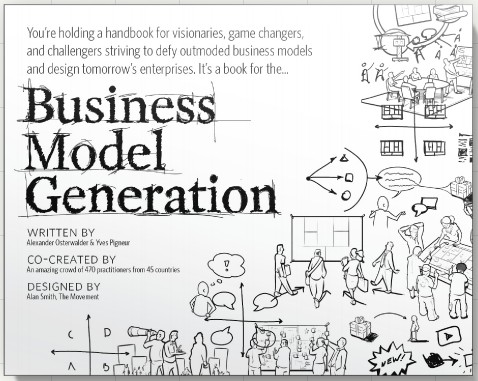
For entrepreneurs designing new ventures, corporate innovation teams working on business model transformation, MBA st…
Buy on Amazon →
Engineers, scientists, and researchers considering or early in the process of commercializing a technical innovation…
Buy on Amazon →
Small business owners — particularly those with five or more years of meaningful profitability — who want a CPA-ancho…
Buy on Amazon →
Tax professionals, policy analysts, and informed citizens who want to understand the structural case for replacing th…
Buy on Amazon →About M Gordon Hunter
Read more from M Gordon Hunter and explore the full bibliography on ClearValue Books.
View M Gordon Hunter's page →Get an email if our take on Contemporary Chief Information Officers changes.
We re-review our picks. We'll email you if Contemporary Chief Information Officers's ranking or review changes — no checking back.

Ready to read Contemporary Chief Information Officers?
Buy the edition we recommend on Amazon.
Buy on Amazon →