

Creating customer value

Curated by Brian Kim, CPA — every pick gets a plain-English summary and the key takeaways.
Brian Kim, CPA · 2.89M YouTube Subscribers →What this book actually teaches
- 01Sustainable competitive advantage rests on total customer value — perceived benefits relative to price — not on any single dimension like features or service.
- 02The central diagnostic: most companies operate on internal assumptions about what customers value rather than measured data, and that gap is where competitive vulnerability lives.
- 03The customer value map plots the firm against alternatives on dimensions weighted by customers, not by engineers or sales — enabling rational investment decisions.
- 04Pricing power follows from demonstrated value advantage on dimensions customers actually weight; over-delivering on unweighted dimensions is waste.
- 05The framework suits stable B2B repeat-purchase markets; it translates less cleanly to high-velocity consumer or platform markets, and some measurement methods have since been updated.
What's in this book
Earl Naumann's Creating Customer Value, published in 1995, is a practitioner-oriented argument that sustainable competitive advantage in business markets rests not on price, product features, or service in isolation but on total customer value — the customer's perception of what they receive relative to what they pay. Naumann draws on industrial marketing research and total-quality-management frameworks to build a methodology for measuring and improving value delivery systematically.
The argument builds in four layers. First, the diagnostic: most companies think they understand what their customers value but are operating on internal assumptions rather than data. The gap between what producers believe they deliver and what customers actually experience is where competitive vulnerability lives. Naumann argues that closing this gap is a prerequisite for any coherent strategy — you cannot improve what you have not measured.
Second, the measurement framework: Naumann walks through methods for capturing customer value perception — structured surveys, value-based segmentation, competitive benchmarking, and importance-performance analysis. The goal is to produce a "customer value map" that shows how the firm stacks up against alternatives on the dimensions customers actually weight, not the dimensions engineers or salespeople find interesting. The methodology is systematic and reproducible, not anecdotal.
Third, the strategic implications: when a firm knows its relative position on the customer value map, it can make rational choices about where to invest. Over-delivering on dimensions customers don't weight is waste. Under-delivering on dimensions customers do weight is vulnerability. Pricing power follows from perceived value advantage on the dimensions that matter.
Fourth, the organizational dimension: delivering superior customer value requires alignment across product, service, and relationship functions — a theme Naumann shares with other TQM-adjacent writing of the period. The book includes implementation guidance for getting cross-functional teams to act on value-map findings rather than filing them.
The natural audience is B2B marketing managers, product managers, and strategists at companies selling into business markets who want a structured approach to understanding and improving their competitive value position.
The weaknesses worth naming: the book is firmly rooted in the TQM era of the early 1990s and carries that vocabulary; some of the survey methodology discussion has been updated by subsequent advances in conjoint analysis, willingness-to-pay measurement, and behavioral economics. The framework is best suited for stable, repeat-purchase B2B markets where long-term relationships allow systematic measurement — it translates less cleanly to high-velocity consumer markets or platform dynamics. The writing is functional rather than elegant, and some chapters are repetitive.
Still a solid methodological grounding for anyone who needs to build a customer-value measurement practice from scratch. The core framework — measure perceived value relative to alternatives on weighted dimensions, then manage the gap — has not been superseded.
Read next
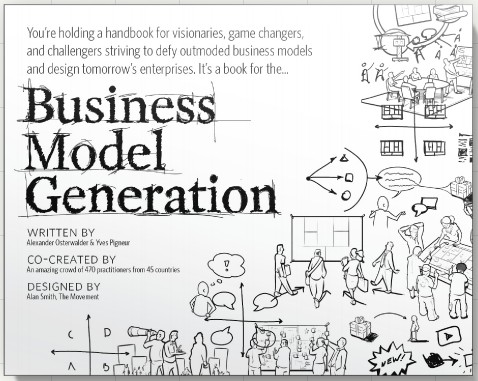
For entrepreneurs designing new ventures, corporate innovation teams working on business model transformation, MBA st…
Buy on Amazon →
Engineers, scientists, and researchers considering or early in the process of commercializing a technical innovation…
Buy on Amazon →
Small business owners — particularly those with five or more years of meaningful profitability — who want a CPA-ancho…
Buy on Amazon →
Tax professionals, policy analysts, and informed citizens who want to understand the structural case for replacing th…
Buy on Amazon →About Earl Naumann
Read more from Earl Naumann and explore the full bibliography on ClearValue Books.
View Earl Naumann's page →Get an email if our take on Creating customer value changes.
We re-review our picks. We'll email you if Creating customer value's ranking or review changes — no checking back.
Across the site
Featured in lists

Ready to read Creating customer value?
Buy the edition we recommend on Amazon.
Buy on Amazon →