

Dirty Rotten Strategies

Curated by Brian Kim, CPA — every pick gets a plain-English summary and the key takeaways.
Brian Kim, CPA · 2.89M YouTube Subscribers →What this book actually teaches
- 01Mitroff's core concept is the Type III error: solving the wrong problem correctly — which he argues is more dangerous than solving the right problem poorly.
- 02Organizations persistently misframe problems by defining them too narrowly, projecting past conditions forward, and designing for average cases while ignoring documented tail risks.
- 03The selection of which problems to address is rarely rational — it reflects the capabilities and interests of the selectors, not the actual priority of the problem.
- 04Cultural and political dynamics cause organizations to maintain flawed problem frames long after disconfirming evidence has accumulated.
- 05The book is descriptive rather than prescriptive — it diagnoses the pattern of faulty strategic reasoning without providing facilitation tools or structured correction frameworks.
What's in this book
Ian Mitroff's central argument in Dirty Rotten Strategies is that organizations consistently fail not because of bad execution but because they solve the wrong problems with the wrong assumptions — what he calls Type III errors. Mitroff, a professor of crisis management at USC, had spent decades analyzing corporate and institutional failures when he wrote this book, and his thesis is that most organizational catastrophes trace back to a flawed problem formulation rather than a flawed solution. The question is rarely "did we solve it correctly?" — it is "did we solve the right problem at all?"
The book catalogs the recurring strategic errors that organizations commit when they misframe problems. These include: defining a problem too narrowly so that a local optimization creates a system-level failure; assuming that historical conditions will persist when structural shifts are already underway; designing for average-case scenarios while ignoring tail risks that are well within historical range; and treating complex adaptive systems as if they were linear and predictable. Mitroff draws examples from corporate disasters, public policy failures, and military miscalculations to show that these errors are not random — they follow predictable patterns that organizations can learn to recognize and counter.
The analytical core of the book is a taxonomy of "dirty rotten strategies" — categories of faulty reasoning that surface reliably across different industries and contexts. Each category gets its own examination: the pitfalls of single-solution thinking, the dangers of siloed expertise that cannot see cross-domain second-order effects, the organizational dynamics that cause bad assumptions to persist long after disconfirming evidence has accumulated. Mitroff also addresses the cultural and political dimensions — why organizations do not update their problem frames even when the evidence demands it, including the social costs of being the person who says the emperor has no clothes.
For a business strategy audience, the most directly applicable section addresses how organizations choose which problems to address and which to ignore. Mitroff argues that this selection process is rarely rational and often reflects the capabilities and interests of the people doing the selecting rather than the actual priority of the problem. Leaders who want to avoid this pattern need to actively build processes for challenging their own problem framing, not just for executing on it.
The weaknesses are real. The book is written at an elevated altitude — it is a book about why organizations think incorrectly, not a playbook for running better strategy sessions. Readers looking for structured frameworks, facilitation guides, or case-study workbooks will find it more descriptive than prescriptive. The examples are compelling individually but span domains so widely (corporate, military, policy) that the cross-cutting lessons sometimes feel asserted rather than rigorously established. The writing can be repetitive, cycling through the same core insight from multiple angles without adding substantially new content.
Worth reading for senior leaders and strategists who are already good at execution and want a framework for diagnosing whether they are executing on the right problem — particularly those in organizations where past success has created strong assumptions about what the right problem even is.
Read next
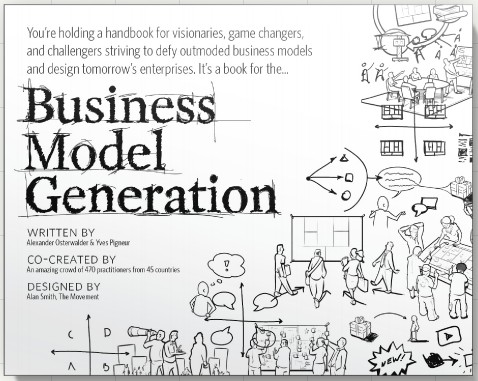
For entrepreneurs designing new ventures, corporate innovation teams working on business model transformation, MBA st…
Buy on Amazon →
Engineers, scientists, and researchers considering or early in the process of commercializing a technical innovation…
Buy on Amazon →
Small business owners — particularly those with five or more years of meaningful profitability — who want a CPA-ancho…
Buy on Amazon →
Tax professionals, policy analysts, and informed citizens who want to understand the structural case for replacing th…
Buy on Amazon →About Ian I Mitroff
Read more from Ian I Mitroff and explore the full bibliography on ClearValue Books.
View Ian I Mitroff's page →Get an email if our take on Dirty Rotten Strategies changes.
We re-review our picks. We'll email you if Dirty Rotten Strategies's ranking or review changes — no checking back.

Ready to read Dirty Rotten Strategies?
Buy the edition we recommend on Amazon.
Buy on Amazon →