

Global Trends 2005

Curated by Brian Kim, CPA — every pick gets a plain-English summary and the key takeaways.
Brian Kim, CPA · 2.89M YouTube Subscribers →What this book actually teaches
- 01Supply-chain interdependence and currency-contagion risk are structural features of globalized trade, not temporary — a 1999 call that held.
- 02Internet-driven disintermediation was correctly anticipated; the technology chapters are the most durable section.
- 03The security analysis has a pre-9/11 blind spot that materially distorts the 2001-2005 forecast.
- 04Foresight exercises age poorly — the value here is the analytical method and the historical snapshot, not the specific predictions.
- 05Useful primarily for students of scenario planning or intellectual historians of late-1990s globalization optimism.
What's in this book
Michael Mazarr's Global Trends 2005 is a structured foresight exercise published by a think-tank consortium in 1999 with a specific horizon: what will the world look like in 2005, and what forces are driving it there? The book is an early entry in the now-familiar "global trends" genre that U.S. intelligence agencies and international bodies have since institutionalized, and it reads as an ancestor to the National Intelligence Council's quadrennial Global Trends reports.
The analytical framework works in two passes. The first is a survey of macro forces that the authors believe will shape the early 2000s: the continuing integration of the global economy, the spread of information technology and its disruption of existing institutions, demographic shifts in the developing world, the persistence of regional conflicts as the post-Cold War order settles, and the relative decline of the nation-state's monopoly over economic and political life in favor of multinational corporations, NGOs, and transnational criminal networks. The second pass applies those forces to specific domains — economics, security, governance, culture — and traces the most probable trajectories and the contingent wildcards that could bend them.
For a business-strategy reader the most durable material sits in two places. The chapter on economic globalization argues, in 1999, that supply-chain interdependence and the currency-crisis contagion risk (fresh from the 1997-1998 Asian financial crisis) are not temporary features but structural properties of the new trading system — a point that turned out to be correct. The chapter on technology anticipates that the internet would hollow out middlemen, compress product cycles, and shift pricing power toward informed consumers; the specific predictions are rough, but the directional logic held. Executives doing scenario planning or geopolitical risk assessment in the early 2000s would have found the framework genuinely useful.
The caveats are significant. The book was written in 1999 and published before September 2001, so the entire security analysis understates political violence and terrorism as a shaping force — the most consequential event of the 2001-2005 period simply isn't in the model. Several specific predictions did not survive contact with reality (the authors were cautiously optimistic about Russia's trajectory). And foresight exercises age poorly by design: the value is in the analytical method, not in the specific calls, most of which the reader can now check against the actual record.
Today this is primarily a document of intellectual history — a window into how sophisticated analysts thought about globalization and technology risk at the peak of late-1990s optimism, before the twin shocks of the dot-com bust and 9/11 reset the frame. Practitioners building scenario-planning skills will find the structure instructive; anyone looking for actionable current intelligence should look to more recent sources.
Read next
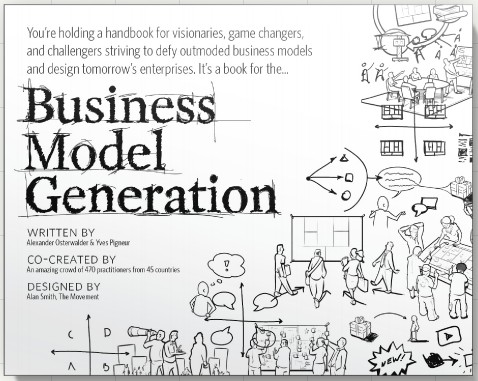
For entrepreneurs designing new ventures, corporate innovation teams working on business model transformation, MBA st…
Buy on Amazon →
Engineers, scientists, and researchers considering or early in the process of commercializing a technical innovation…
Buy on Amazon →
Small business owners — particularly those with five or more years of meaningful profitability — who want a CPA-ancho…
Buy on Amazon →
Tax professionals, policy analysts, and informed citizens who want to understand the structural case for replacing th…
Buy on Amazon →About Michael J Mazarr
Read more from Michael J Mazarr and explore the full bibliography on ClearValue Books.
View Michael J Mazarr's page →Get an email if our take on Global Trends 2005 changes.
We re-review our picks. We'll email you if Global Trends 2005's ranking or review changes — no checking back.

Ready to read Global Trends 2005?
Buy the edition we recommend on Amazon.
Buy on Amazon →