

Leadership and management issues for a new century

Curated by Brian Kim, CPA — every pick gets a plain-English summary and the key takeaways.
Brian Kim, CPA · 2.89M YouTube Subscribers →What this book actually teaches
- 01The book's central argument is that knowledge economy conditions — distributed work, flatter hierarchies, rapid change — demanded a substantially different leadership repertoire than the command-and-control model that had worked in stable industrial organizations.
- 02Olivero's earlier research on executive coaching, showing that structured coaching combined with training produced significantly larger productivity gains than training alone, is embedded here and anticipated the professionalization of executive coaching as a field in the following decade.
- 03Team leadership in matrix and cross-functional structures requires building commitment without direct authority and managing across competing organizational loyalties — skills the book treats as distinct from and harder than traditional supervisory management.
- 04Middle managers are identified as the critical implementation layer where strategic initiatives succeed or fail; the book's change management sections focus on diagnosing and addressing middle-management resistance as a structural problem, not an individual failure.
- 05The 2000 publication date limits the book's current utility — remote work, algorithmic management, platform organizations, and AI-augmented decision-making are all outside its frame, and readers who need current frameworks will find more useful starting points in post-2010 leadership literature.
What's in this book
Leadership and Management Issues for a New Century by Gerald A. Olivero, published in 2000, is a practitioner-focused anthology that assembles perspectives on the leadership and management challenges that organizations faced at the turn of the millennium. Olivero, an organizational development researcher and consultant, structures the collection around the premise that the transition into the twenty-first century demanded a genuine rethinking of management theory rather than incremental adjustments to existing frameworks — driven by forces including accelerating globalization, the early internet economy, demographic shifts in the workforce, and increasing organizational complexity.
The book's opening sections address the changing relationship between leaders and organizations. Olivero draws on both academic research and practitioner case studies to examine how the command-and-control management model inherited from twentieth-century industrial organizations was breaking down under conditions of rapid change, distributed knowledge work, and flatter organizational structures. The argument is not that hierarchy is obsolete — Olivero is careful to distinguish between formal authority structures and the micro-management styles that undermine knowledge worker performance — but that the repertoire of leadership behaviors required in the new environment was substantially different from what had produced results in stable, hierarchical industries.
A central section of the book examines executive coaching as a development intervention, which was still an emerging practice in 2000. Olivero had contributed earlier research demonstrating that managerial training combined with structured coaching produced substantially larger improvements in productivity than training alone — a finding that anticipated the explosion of executive coaching as a professional field in the following decade. The book treats coaching not as a remedial tool for underperforming managers but as a performance development investment for leaders who are already effective and want to extend their range.
The book also addresses team leadership in distributed and cross-functional environments. As organizations moved from departmental silos to project-based and matrix structures, the skills required of team leaders shifted: the ability to build commitment without direct authority, to manage across reporting lines, and to sustain performance in teams whose members had competing organizational loyalties. The treatment of these dynamics is grounded in organizational behavior research and avoids the motivational-speaker register that characterizes a lot of leadership writing from this period.
Organizational culture and change management receive sustained attention in the later sections. Olivero examines how leaders communicate strategic direction during periods of uncertainty, how cultural norms either accelerate or resist organizational adaptation, and how middle managers — often the implementation layer where strategic initiatives succeed or fail — can be better supported in change efforts. The change management discussion draws on then-current research on organizational learning and resistance, with practical frameworks for diagnosing where change efforts are likely to stall.
Who this is for: managers moving into senior roles in organizations undergoing structural or strategic change, HR and organizational development professionals designing leadership development programs, and MBA students who want a research-grounded overview of leadership theory as it stood at the inflection point between the industrial and knowledge economy eras.
Weaknesses
the 2000 publication date is a genuine limitation. The internet economy that Olivero references was pre-dot-com-crash, and the leadership challenges posed by remote work, algorithmic management, platform organizations, and AI-augmented decision-making are entirely outside the book's frame. Some of the research cited has been superseded by two additional decades of organizational behavior literature. The anthology format also produces uneven depth — some contributions are substantive and others read as practitioner summaries without the rigor to anchor the claims they make. Readers who need current leadership frameworks will find more useful starting points in post-2010 literature.
Verdict
a competent snapshot of leadership thinking at a specific transitional moment; most valuable as historical context for understanding how management theory was evolving as organizations began navigating the knowledge economy.
Read next
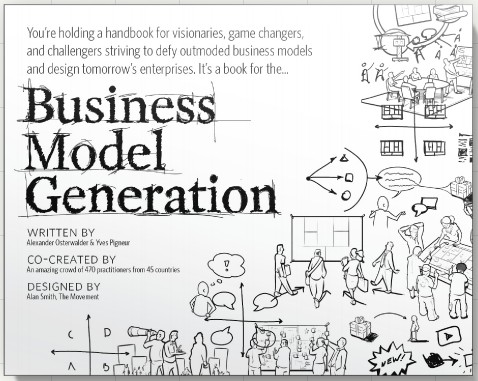
For entrepreneurs designing new ventures, corporate innovation teams working on business model transformation, MBA st…
Buy on Amazon →
Engineers, scientists, and researchers considering or early in the process of commercializing a technical innovation…
Buy on Amazon →
Small business owners — particularly those with five or more years of meaningful profitability — who want a CPA-ancho…
Buy on Amazon →
Tax professionals, policy analysts, and informed citizens who want to understand the structural case for replacing th…
Buy on Amazon →About Dudley B Woodward
Read more from Dudley B Woodward and explore the full bibliography on ClearValue Books.
View Dudley B Woodward's page →Get an email if our take on Leadership and management issues for a new century changes.
We re-review our picks. We'll email you if Leadership and management issues for a new century's ranking or review changes — no checking back.
Across the site
Featured in lists

Ready to read Leadership and management issues for a new century?
Buy the edition we recommend on Amazon.
Buy on Amazon →