

Organizational behavior and public management

Curated by Brian Kim, CPA — every pick gets a plain-English summary and the key takeaways.
Brian Kim, CPA · 2.89M YouTube Subscribers →What this book actually teaches
- 01Public agencies cannot directly import private-sector incentive structures — civil service protections, salary compression, and mission-driven motivation require a different management toolkit.
- 02Classical, human-relations, and systems perspectives each capture real organizational phenomena; effective managers draw on all three rather than picking one.
- 03Contingency leadership theory holds that no single leadership style works in every situation — the right approach depends on task structure, position power, and follower readiness.
- 04Organizational change in government is harder than in private firms because of civil service rules, legislative oversight, and diffuse accountability — planned change models must account for these constraints.
- 05Motivation research suggests public employees often weight autonomy, mission, and public service meaning over compensation, which shifts which levers managers should prioritize.
What's in this book
Michael Vasu's textbook is written for graduate programs in public administration, and it shows in structure and scope: the book covers classical organization theory, human relations, motivation theory, leadership models, group dynamics, and organizational change across discrete chapters, with each concept introduced, compared to alternatives, and then situated in the specific context of government agencies rather than private firms. That public-sector framing is the book's distinguishing feature in a crowded field.
The early chapters work through the historical arc of organizational theory — from Frederick Taylor's scientific management and its emphasis on efficiency and specialization, to the Hawthorne studies and the human relations movement's discovery that worker behavior is shaped by social context as much as financial incentive, to the systems thinking of the 1960s that treated organizations as open systems interacting with their environments. Vasu treats each era not as superseded but as contributing a lens that still explains certain organizational phenomena.
The motivation theory section covers Maslow's hierarchy, Herzberg's two-factor theory, McClelland's achievement motivation, and expectancy theory. For a public-sector audience, Vasu's most useful contribution here is examining which motivational levers work differently in government organizations: civil service protections limit performance-based dismissal, salary compression limits financial incentives, and mission-driven employees often weight autonomy and public service meaning over compensation. The implication is that managers in public agencies cannot simply import private-sector incentive systems; they need to understand which motivational levers are actually available to them.
The leadership chapters survey trait theories, behavioral approaches (Ohio State, Michigan studies), and contingency models (Fiedler, path-goal, situational leadership). Vasu's coverage is comprehensive but academically neutral — he presents the evidence for and against each model rather than advocating for one. Readers expecting a prescription will find this frustrating; readers who want to understand why leadership research produced so many competing frameworks will find it clarifying.
The chapters on organizational change and development are the most practically useful for managers rather than students. Vasu covers resistance to change, planned change models, and the specific constraints that make organizational change harder in public agencies than in private firms: civil service rules, legislative oversight, interest-group pressure, and the diffuse accountability structures of democratic governance.
Weaknesses
this is a textbook, not a practitioner guide, and reads like one. The writing is clear but flat, the case studies are dated (the examples are from the 1970s and 1980s), and the chapter-end discussion questions are aimed at seminar formats rather than self-directed readers. The public-sector framing, while genuinely distinctive, also limits the book's applicability to readers in private or nonprofit organizations. The 1990 edition predates the new public management reforms of the 1990s, the digital transformation of government, and the evidence-based management literature that emerged after publication.
Verdict
a solid graduate-level survey for students of public administration. Not the right entry point for a business owner or general management reader — organizational behavior textbooks from Robbins or Colquitt cover the same theory with more current examples and broader applicability.
Read next
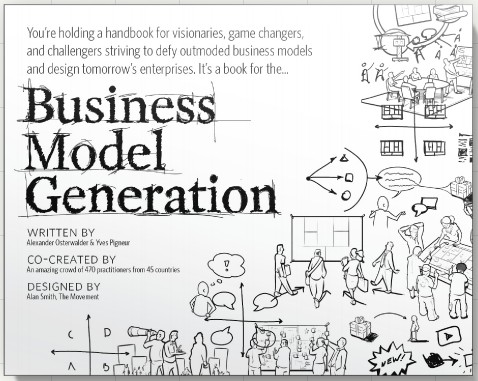
For entrepreneurs designing new ventures, corporate innovation teams working on business model transformation, MBA st…
Buy on Amazon →
Engineers, scientists, and researchers considering or early in the process of commercializing a technical innovation…
Buy on Amazon →
Small business owners — particularly those with five or more years of meaningful profitability — who want a CPA-ancho…
Buy on Amazon →
Tax professionals, policy analysts, and informed citizens who want to understand the structural case for replacing th…
Buy on Amazon →About Michael Lee Vasu
Read more from Michael Lee Vasu and explore the full bibliography on ClearValue Books.
View Michael Lee Vasu's page →Get an email if our take on Organizational behavior and public management changes.
We re-review our picks. We'll email you if Organizational behavior and public management's ranking or review changes — no checking back.

Ready to read Organizational behavior and public management?
Buy the edition we recommend on Amazon.
Buy on Amazon →