

Stall points

Curated by Brian Kim, CPA — every pick gets a plain-English summary and the key takeaways.
Brian Kim, CPA · 2.89M YouTube Subscribers →What this book actually teaches
- 01The research base is a 50-year, 500+ stall event dataset tracking every Fortune 100 company since 1955 — the empirical foundation distinguishes this from case-study-based strategy books and gives the nine root causes taxonomic weight rather than anecdotal support.
- 02The central finding is that most growth stalls are internal and strategic in origin, not external and market-driven — premium position captivity, innovation management failures, and strategic dependency account for the majority of documented stall events.
- 03Recovery is rare: only about one quarter of companies that experienced a stall managed to return to pre-stall growth rates within a decade, which reframes the strategic priority from recovery to early detection and prevention.
- 04Early warning signals typically appear two to three years before a stall becomes visible in financial results — the book's diagnostic framework is designed to surface those signals while there is still time to act.
- 05The 2008 vintage predates platform economy and AI-driven competitive dynamics that now accelerate several of the identified stall factors; the taxonomy remains sound but requires updating for the specific mechanisms by which digital disruption now amplifies premium position captivity and channel concentration risk.
What's in this book
Stall Points by Matthew S. Olson and Derek van Bever, published in 2008 by Yale University Press, is a research-based corporate strategy book built on a comprehensive analysis of Fortune 100 companies over a 50-year period. The central finding is both simple and uncomfortable: nearly every large company that has ever achieved Fortune 100 status has experienced at least one significant revenue growth stall, and the primary causes of those stalls are overwhelmingly internal and strategic rather than external and market-driven. The book's main contribution is the identification and documentation of nine root causes that account for the vast majority of corporate growth stalls — and the finding that most of them are avoidable.
The research methodology is the book's credibility anchor. Olson and van Bever (then at the Corporate Executive Board) built a database tracking revenue growth for Fortune 100 companies going back to 1955, identifying stall events as periods where a company's decade-long revenue growth rate dropped by four or more percentage points and stayed depressed for at least two years. The resulting dataset of 500+ stall events gives the book empirical weight that distinguishes it from the strategy consulting books that rest on case studies and pattern-matching without systematic data.
The nine root causes cluster into three categories. The first is premium position captivity — companies that become so committed to their existing premium product or market position that they fail to respond when value-tier competitors or disruptive alternatives gain ground from below. This is the category that explains why dominant companies across technology, retail, consumer goods, and media have repeatedly failed to respond to lower-cost entrants until it was too late to maintain growth. The second category is innovation management failures: the premature abandonment of core products before replacements are proven, the over-investment in incremental innovation at the expense of breakthrough work, and the failure to scale successful innovation from pilot to enterprise. The third is strategic dependency — over-reliance on a single large customer, a single channel, or a single product franchise to the point where the loss of any one of them triggers a stall the company cannot recover from.
The book's secondary finding is as important as the root cause taxonomy: recovery from growth stalls is rare. Of the 500+ stall events in the dataset, only about a quarter of companies managed to return to their pre-stall growth rates within a decade. This finding reframes the strategic calculus from “how do we recover from a stall” to “how do we see it coming early enough to prevent it” — and the book's second half addresses the early warning signals that typically appear two to three years before a stall becomes visible in financial results.
The diagnostic framework Olson and van Bever provide is organized around what they call stall factor profiles — a structured self-assessment that helps leadership teams identify which of the nine root causes are most active in their current business. The tool is practical without being mechanical: it requires honest assessment of strategic commitments, innovation portfolio balance, customer and channel concentration, and market position defensibility.
This is for CEOs, strategy executives, board members, and corporate strategists at established companies who are responsible for sustaining growth trajectories — particularly those leading businesses that have achieved significant market position and are managing the specific risks that come with that position.
The weaknesses are scope and prescriptive depth. The book is diagnostic and taxonomic rather than prescriptive — it is significantly better at identifying and categorizing the causes of stalls than at providing specific recovery playbooks. The research base is Fortune 100 companies, which means the findings are most directly applicable to large enterprises and require some translation for mid-market or high-growth companies operating in different competitive dynamics. The 2008 publication date predates the platform economy, digital marketplace, and AI-driven competitive disruption dynamics that now operate as accelerants to several of the stall factors the book identifies.
For strategy leaders who want an empirically grounded framework for diagnosing the specific internal causes that have historically derailed large company growth — and for boards who want a diagnostic vocabulary for early warning conversations — Stall Points is one of the most rigorously researched books in the genre.
Read next
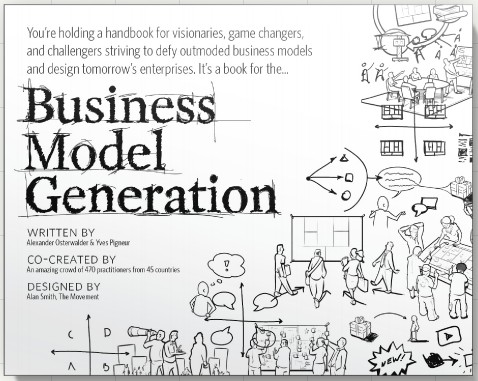
For entrepreneurs designing new ventures, corporate innovation teams working on business model transformation, MBA st…
Buy on Amazon →
Engineers, scientists, and researchers considering or early in the process of commercializing a technical innovation…
Buy on Amazon →
Small business owners — particularly those with five or more years of meaningful profitability — who want a CPA-ancho…
Buy on Amazon →
Tax professionals, policy analysts, and informed citizens who want to understand the structural case for replacing th…
Buy on Amazon →About Matthew S Olson 2
Read more from Matthew S Olson 2 and explore the full bibliography on ClearValue Books.
View Matthew S Olson 2's page →Get an email if our take on Stall points changes.
We re-review our picks. We'll email you if Stall points's ranking or review changes — no checking back.
