

Taxation, Wealth, and Saving

Curated by Brian Kim, CPA — every pick gets a plain-English summary and the key takeaways.
Brian Kim, CPA · 2.89M YouTube Subscribers →What this book actually teaches
- 01Bradford's X Tax — a progressive consumption tax that taxes business cash flow at the firm level and wages at graduated household rates — is the book's central policy contribution; it eliminates the double taxation of capital income while preserving progressivity, and it anticipated features of territorial tax reform debates that became prominent in the 2010s and 2020s.
- 02The inflation and capital gains essays show rigorously how even moderate inflation pushes effective capital gains tax rates far above statutory rates by taxing nominal rather than real appreciation — a structural problem that income-tax systems have never cleanly resolved.
- 03Bradford's analysis of saving incentives distinguishes carefully between efficiency costs (how capital income taxation distorts saving and investment behavior) and equity concerns (who bears the burden) — a distinction that most political debate on wealth taxation collapses in ways Bradford explicitly criticizes.
- 04The international tax essays provide a framework for thinking about capital export neutrality versus capital import neutrality and the coordination problems created by mobile capital — frameworks that remain analytically useful for understanding the OECD Pillar Two global minimum tax debates of the 2020s.
- 05This is an academic collection requiring familiarity with welfare economics and optimal tax theory; it is not a practitioner guide and general business readers seeking practical tax planning will not find it here.
What's in this book
Taxation, Wealth, and Saving by David F. Bradford, published in 2000 by MIT Press, is a collection of essays by one of the twentieth century's most rigorous tax economists. Bradford, a Princeton professor who served on the President's Council of Economic Advisers and advised the U.S. Treasury on fundamental tax reform, spent his career developing the analytical foundations for consumption-based taxation — the idea that economic welfare is maximized by taxing what people spend rather than what they earn. This volume gathers his most important contributions to that project, written over roughly three decades.
The book's intellectual core is Bradford's elaboration of the X Tax — a progressive consumption tax system that he developed as a practical and equitable alternative to both the income tax and flat-consumption-tax proposals like the national retail sales tax or VAT. The X Tax taxes business cash flow (revenues minus purchases, wages, and capital expenditure) at the firm level and wages at the household level using graduated rates, achieving progressive distribution while eliminating the double taxation of capital income that Bradford argued systematically distorts saving and investment decisions. The proposal anticipates many features of the territorial tax reforms that became policy debates in the 2010s and 2020s.
A substantial portion of the essays address the measurement problem at the heart of income taxation: how to accurately measure income in a world of inflation, uncertain asset values, and complex financial instruments. Bradford's work on inflation indexing and the taxation of capital gains is technical but accessible to readers with economics backgrounds — he is particularly sharp on how inflation, even moderate inflation, can push effective capital gains tax rates far above statutory rates by taxing nominal rather than real appreciation. These essays provide the analytical foundation for understanding why capital gains tax policy is contested in ways that ordinary income tax policy is not.
The saving and wealth accumulation essays examine how different tax systems affect households' incentives to save, the distribution of wealth across generations, and the efficiency costs of taxing capital income. Bradford's analysis of bequest motives, inter-generational wealth transfer, and the design of estate and inheritance taxes is among the most careful in the literature — he distinguishes consistently between equity concerns (who bears the tax burden) and efficiency concerns (how the tax distorts behavior), and he resists the conflation of the two that characterizes much political debate on wealth taxation.
The international tax essays, written largely in the 1990s, address how national tax systems interact in a world of mobile capital — anticipating the coordination problems that became acute after the 2008 financial crisis and the OECD's BEPS project. Bradford's framework for thinking about capital export neutrality versus capital import neutrality, and the trade-offs between them, remains relevant to the Pillar Two global minimum tax debates of the 2020s.
Who this is for: tax economists, tax attorneys, policy analysts, and serious students of public finance who want to understand the analytical foundations of consumption-tax reform arguments — not a practitioner guide but an essential reference for anyone working on fundamental tax reform, capital taxation, or wealth policy.
Weaknesses
this is an academic collection, not a practitioner guide or policy primer. The essays assume familiarity with welfare economics, optimal tax theory, and the structure of the U.S. tax code. General business readers looking for practical tax planning guidance will not find it here. The 2000 publication date also means the specific reform proposals predate both the Tax Cuts and Jobs Act of 2017 and the post-2020 debates on wealth taxation and global minimum tax coordination — readers need to update Bradford's frameworks with current-law developments.
Verdict
essential reading for anyone doing serious analytical work on tax reform, capital taxation, or the economic effects of saving incentives. Demanding but rewarding for readers with sufficient economics background.
Read next
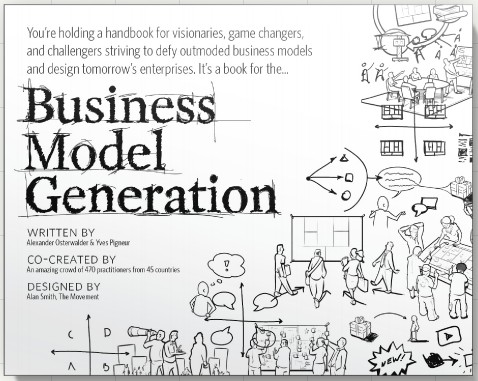
For entrepreneurs designing new ventures, corporate innovation teams working on business model transformation, MBA st…
Buy on Amazon →
Engineers, scientists, and researchers considering or early in the process of commercializing a technical innovation…
Buy on Amazon →
Small business owners — particularly those with five or more years of meaningful profitability — who want a CPA-ancho…
Buy on Amazon →
Tax professionals, policy analysts, and informed citizens who want to understand the structural case for replacing th…
Buy on Amazon →About David F Bradford
Read more from David F Bradford and explore the full bibliography on ClearValue Books.
View David F Bradford's page →Get an email if our take on Taxation, Wealth, and Saving changes.
We re-review our picks. We'll email you if Taxation, Wealth, and Saving's ranking or review changes — no checking back.

Ready to read Taxation, Wealth, and Saving?
Buy the edition we recommend on Amazon.
Buy on Amazon →