

The Dragons' Den Guide to Assessing Your Business Concept

Curated by Brian Kim, CPA — every pick gets a plain-English summary and the key takeaways.
Brian Kim, CPA · 2.89M YouTube Subscribers →What this book actually teaches
- 01The book's core argument is that most business failures originate in concept validation failures before launch, not execution failures after it — and the investor pitch format is a useful forcing function for the rigorous self-examination that prevents those failures.
- 02Vyge draws a practical distinction between total addressable market and the realistic customer segment a startup can actually reach and convert, providing frameworks for estimating both without the false precision that undermines credibility with serious investors.
- 03The competitive analysis chapter directly addresses the investor red flag of "no real competitors" — Vyge explains why experienced investors interpret this claim as a signal of inadequate market research and provides a framework for identifying both direct and indirect competition honestly.
- 04The team assessment chapter is frank about the fact that investors bet on teams as much as concepts, with practical guidance on identifying and filling skill gaps before a capital raise rather than hoping investors overlook them.
- 05The Dragon's Den framing calibrates the content toward high-growth, scalable businesses — founders running lifestyle businesses or local service companies will find the investor-oriented framework less directly applicable, though the concept-validation discipline transfers broadly.
What's in this book
The Dragons' Den Guide to Assessing Your Business Concept by John Vyge, published in 2012 by McGraw-Hill Ryerson, is a Canadian business guide tied to the CBC television series Dragons' Den — the Canadian equivalent of Shark Tank — in which entrepreneurs pitch their businesses to a panel of experienced investors. Vyge, a business writer with a background in entrepreneurship education, uses the Dragons' Den format as a framework for teaching entrepreneurs how to pressure-test a business idea before committing serious time or capital to it. The book's premise is that most business failures can be traced to failures of concept validation that happen before launch, not failures of execution after it.
The book's structure follows the process a founder would go through if they were genuinely preparing to stand in front of a room of skeptical, experienced investors. Each chapter maps to a dimension of the business concept that investors actually probe: the problem being solved, the size and accessibility of the target market, the competitive dynamics, the revenue model, the founding team's credibility and capability, and the capital requirements and use of funds. Rather than treating these as boxes to check for a presentation, Vyge frames each dimension as a genuine strategic question the entrepreneur needs to answer for themselves — the investor audience is a forcing function for rigor, not the end goal.
The market analysis sections are practically grounded. Vyge distinguishes between total addressable market (the theoretical ceiling) and the realistic customer segment a startup can actually reach and convert, and he provides frameworks for estimating both without fabricating precision. The competitive analysis chapter addresses a common founder failure mode: the belief that a business has no real competitors. Vyge is direct about why investors treat this claim as a red flag and how to conduct a credible competitive landscape analysis that identifies both direct and indirect competition.
The revenue model chapters cover the structural difference between business models — product sales versus subscription versus service versus marketplace — with analysis of the unit economics that distinguish sustainable from unsustainable models. This section is accessible to early-stage entrepreneurs who have not yet developed a framework for thinking about margins, customer acquisition cost, and lifetime value as a system rather than as isolated metrics.
The team assessment chapter is notable for its honesty about what investors actually evaluate versus what founders assume they evaluate. Vyge is clear that investors bet on teams as much as concepts, and the chapter provides practical guidance on identifying and filling skill gaps before a capital raise rather than hoping investors don't notice them.
Who this is for: early-stage Canadian entrepreneurs preparing for an investor pitch or a serious capital raise, and any founder who wants a structured framework for stress-testing a business concept before committing to it — the Canadian context is light enough that most of the content applies broadly.
Weaknesses
the Dragon's Den framing is a mixed asset — it makes the book accessible and concrete, but it also means the content is calibrated to the television format, which favors scalable, high-growth businesses over the lifestyle businesses and local service companies that represent the majority of actual small business formation. The revenue model and unit economics coverage, while useful, is introductory rather than deep — founders who have already developed financial literacy will want more rigorous treatment. The 2012 publication date means the chapters on digital marketing and online customer acquisition are dated.
Verdict
a solid concept-validation framework for first-time entrepreneurs who need a structured forcing function to identify the weaknesses in their business idea before capital and time are committed — the investor-pressure-test framing works as a practical discipline even for founders who are not actually pursuing venture investment.
Read next
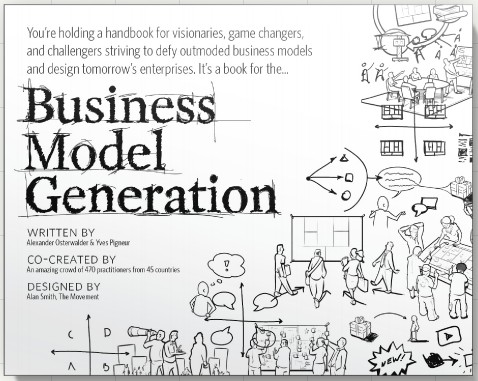
For entrepreneurs designing new ventures, corporate innovation teams working on business model transformation, MBA st…
Buy on Amazon →
Engineers, scientists, and researchers considering or early in the process of commercializing a technical innovation…
Buy on Amazon →
Small business owners — particularly those with five or more years of meaningful profitability — who want a CPA-ancho…
Buy on Amazon →
Tax professionals, policy analysts, and informed citizens who want to understand the structural case for replacing th…
Buy on Amazon →About John Vyge
Read more from John Vyge and explore the full bibliography on ClearValue Books.
View John Vyge's page →Get an email if our take on The Dragons' Den Guide to Assessing Your Business Concept changes.
We re-review our picks. We'll email you if The Dragons' Den Guide to Assessing Your Business Concept's ranking or review changes — no checking back.

Ready to read The Dragons' Den Guide to Assessing Your Business Concept?
Buy the edition we recommend on Amazon.
Buy on Amazon →