

The Ernst & Young tax saver's guide 2003

Curated by Brian Kim, CPA — every pick gets a plain-English summary and the key takeaways.
Brian Kim, CPA · 2.89M YouTube Subscribers →What this book actually teaches
- 01This is a 2003 historical-reference edition — every numerical threshold (contribution limits, standard deduction, estate tax thresholds, AMT brackets) has been superseded by multiple rounds of tax legislation including the 2001/2003 Bush cuts, the 2017 Tax Cuts and Jobs Act, the 2019 SECURE Act, and SECURE 2.0 in 2022; do not apply specific figures to a current return.
- 02The book's durable value is structural rather than specific: the framework for thinking about tax planning as a year-round activity organized around income timing, deduction timing, retirement contributions, and investment decisions retains conceptual usefulness even though the specific numbers are obsolete.
- 03Richardson's core argument — that proactive, year-round tax planning consistently outperforms April scrambles — was accurate in 2003 and remains accurate today, even though the specific levers the book describes have changed.
- 04The retirement planning chapters reflect pre-SECURE Act rules on required minimum distributions, catch-up contributions, and Roth account treatment that were materially changed in 2019 and 2022; these sections are historically interesting but operationally obsolete.
- 05Tax professionals, policy researchers, and serious students of the code's evolution are the appropriate audience; current individual filers should use an updated edition, current IRS publications, or a licensed CPA for actionable guidance.
What's in this book
The Ernst & Young Tax Saver's Guide 2003 by Margaret Milner Richardson is a dated but structurally instructive snapshot of U.S. personal tax planning as it existed before the Tax Cuts and Jobs Act of 2017 reshaped nearly every major provision individual filers encounter. Richardson, a former IRS Commissioner, co-authored this annual guide series with Ernst & Young's tax practice during an era when the tax code looked meaningfully different: marginal rates, the standard deduction, the alternative minimum tax, estate tax thresholds, retirement contribution limits, and treatment of pass-through business income all operated under different rules. The 2003 edition captures a moment when the Bush tax cuts of 2001 and 2003 were phasing in — a transition period with its own planning complexity that has since been superseded multiple times over.
The book's core argument is that proactive, year-round tax planning — rather than a reactive scramble in April — consistently produces better outcomes for individual filers and small business owners. Richardson and the E&Y team organize this argument around specific planning levers: timing of income and deductions, retirement account contributions and distributions, investment loss harvesting, charitable giving strategies, and estate planning thresholds. Each chapter explains the relevant code provision, illustrates it with a numerical example, and identifies the planning opportunity or pitfall. The structure is practical rather than theoretical — the guide is designed to be read by an intelligent non-attorney filer, not a tax professional.
The retirement planning chapters are particularly representative of how much the landscape has changed. The 2003 guide covers contribution limits and distribution rules for IRAs, 401(k)s, and Roth accounts that have been adjusted repeatedly in subsequent years — the SECURE Act of 2019 and SECURE 2.0 of 2022 alone introduced required minimum distribution age changes, new catch-up contribution rules, and Roth account changes that render the 2003 specifics obsolete for any current planning purpose. The estate tax chapter reflects a threshold and rate structure that bore no resemblance to the landscape post-TCJA.
What retains value in this edition is structural rather than specific: the mental model of tax planning as a year-round activity organized around identifiable decision points, the framework for thinking about marginal rates and the marginal value of deductions, and the general architecture of how different account types interact. A reader who has never engaged seriously with tax planning could extract a durable conceptual vocabulary from this guide, even though every numerical threshold and many of the specific strategies it describes no longer apply.
Who this is for: tax professionals, tax historians, or serious students of tax policy who want a clean primary-source snapshot of individual tax planning in the early 2000s. Not for current filers — the specific numbers and many strategies are pre-TCJA, pre-SECURE, and pre-Section 199A, making them actively misleading if applied to a current return.
Weaknesses
every numerical threshold in this book is wrong for current filers. The estate tax provisions, AMT thresholds, retirement contribution limits, and pass-through business treatment have all changed materially since 2003. Following specific guidance from this edition without professional verification could result in missed deductions or compliance errors. The guide also reflects pre-digital assumptions about record-keeping and documentation that contemporary tax software has substantially displaced.
Verdict
a historical-reference document only — useful for understanding the pre-TCJA baseline or studying the evolution of tax planning strategy, but not for any current filer who needs actionable guidance. Current filers should consult an updated edition, a licensed CPA, or current IRS publications.
Read next
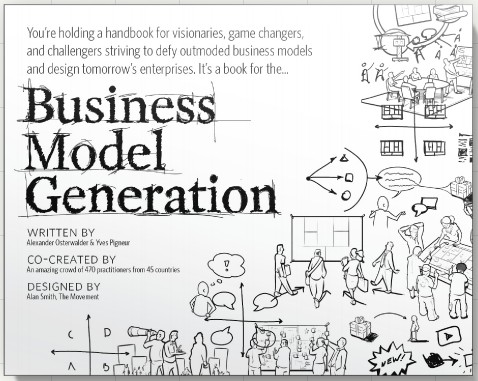
For entrepreneurs designing new ventures, corporate innovation teams working on business model transformation, MBA st…
Buy on Amazon →
Engineers, scientists, and researchers considering or early in the process of commercializing a technical innovation…
Buy on Amazon →
Small business owners — particularly those with five or more years of meaningful profitability — who want a CPA-ancho…
Buy on Amazon →
Tax professionals, policy analysts, and informed citizens who want to understand the structural case for replacing th…
Buy on Amazon →About Margaret Milner Richardson
Read more from Margaret Milner Richardson and explore the full bibliography on ClearValue Books.
View Margaret Milner Richardson's page →Get an email if our take on The Ernst & Young tax saver's guide 2003 changes.
We re-review our picks. We'll email you if The Ernst & Young tax saver's guide 2003's ranking or review changes — no checking back.

Ready to read The Ernst & Young tax saver's guide 2003?
Buy the edition we recommend on Amazon.
Buy on Amazon →