

The Kennedy-Johnson Tax Cut

Curated by Brian Kim, CPA — every pick gets a plain-English summary and the key takeaways.
Brian Kim, CPA · 2.89M YouTube Subscribers →What this book actually teaches
- 01Prachowny's central revisionist finding is that the macroeconomic output gap the Kennedy CEA used to justify the 1964 tax cut was significantly overstated — the economy was already closing toward full employment through normal cyclical recovery, which reduces the tax cut's attributable contribution to the subsequent expansion.
- 02The Federal Reserve's monetary accommodation during the mid-1960s expansion was as important as the fiscal stimulus to actual economic outcomes, complicating the clean Keynesian demand-management interpretation that made the Kennedy-Johnson tax cut famous as a policy case study.
- 03Walter Heller's "full employment budget" and "fiscal drag" framing — used to build the political case for the tax cut — is examined critically: Prachowny separates what the evidence supported from what was political advocacy before Congress.
- 04The book provides a worked example of macroeconomic counterfactual methodology — how to decompose an economic expansion into fiscal, monetary, and trend-growth components — that is transferable to any analysis of how tax policy changes affect the broader economy.
- 05The econometric sections assume familiarity with macroeconomic modeling; general business readers who want the conclusions without the methodology can read the introductory and concluding chapters, but the book's full value requires engagement with the empirical core.
What's in this book
The Kennedy-Johnson Tax Cut: A Revisionist History by Martin F. J. Prachowny, published in 2000 by Edward Elgar, is an economic history of the Revenue Act of 1964 — the large income tax cut signed into law by Lyndon Johnson, designed and championed by Kennedy's economic team, that became one of the most cited episodes in the history of American fiscal policy. Prachowny, an economics professor at Queen's University, undertakes a systematic reassessment of what the tax cut actually accomplished and whether the conventional story about its effects holds up under econometric scrutiny.
The conventional narrative is that the Kennedy-Johnson tax cut demonstrated Keynesian fiscal policy in practice: a deliberate budget deficit, engineered by cutting taxes during a period of slack economic capacity, that successfully stimulated aggregate demand and moved the economy toward full employment. The 1964 act reduced top marginal rates from 91% to 70% and cut across all brackets, and the U.S. economy's strong performance through the mid-1960s was widely attributed — by economists, by journalists, and by policymakers — to the fiscal stimulus it delivered. The tax cut became a reference point for both Keynesian demand management advocates and, later, supply-side tax cut arguments.
Prachowny's revisionism cuts in two directions. First, he constructs a detailed macroeconomic counterfactual — what would U.S. output, employment, and growth have looked like in the absence of the tax cut — and finds that the actual macroeconomic gap that existed before 1964 was considerably smaller than the Kennedy Council of Economic Advisers estimated. This matters because the Keynesian case for the tax cut rested on a large output gap that required stimulus to close; if the gap was already closing through normal cyclical recovery, the tax cut's contribution to the subsequent expansion is proportionally smaller. Second, Prachowny examines the monetary policy environment — the Federal Reserve's accommodation of the fiscal expansion — and argues that the money supply dynamics during the period were more important to the expansion than the fiscal impulse alone, complicating the clean Keynesian interpretation.
The book also addresses the political economy of how the Kennedy administration's economic team framed the tax cut to Congress and the public. The Council of Economic Advisers, led by Walter Heller, made the case for the tax cut using the language of the "full employment budget" concept — arguing that the federal budget was structurally too tight even at full employment, and that a permanent tax reduction was needed to break the "fiscal drag" that was holding back growth. Prachowny examines these arguments carefully, distinguishing between what the evidence supported and what was political advocacy.
For business readers and investors, the most useful content is the methodological framework Prachowny applies — how to construct a macroeconomic counterfactual, how to decompose an expansion into fiscal versus monetary versus trend-growth components, and how to evaluate retrospective claims about policy effectiveness. These tools are relevant to any analysis of how tax policy changes affect the broader economy, a perennially contested question in the business planning and investment environments where fiscal policy expectations matter.
Who this is for: economic historians, policy analysts, and serious students of fiscal policy who want a rigorous empirical reassessment of one of the most cited episodes in American tax policy history. Also useful for business economists and analysts who want a worked example of macroeconomic counterfactual methodology applied to a high-stakes policy question.
Weaknesses
the econometric sections are demanding and assume familiarity with macroeconomic modeling that general business readers will not have. The book is also narrow in historical scope — readers who want broader context on the Kennedy tax debates, the Great Society fiscal environment, or the competing economic schools that shaped 1960s policy will need supplementary sources. The Edward Elgar publication suggests an academic press audience; the writing reflects that context.
Verdict
a rigorous and underappreciated contribution to the empirical literature on fiscal policy effectiveness. Essential reading for policy economists; accessible to analytically oriented business readers willing to engage with the methodology.
Read next
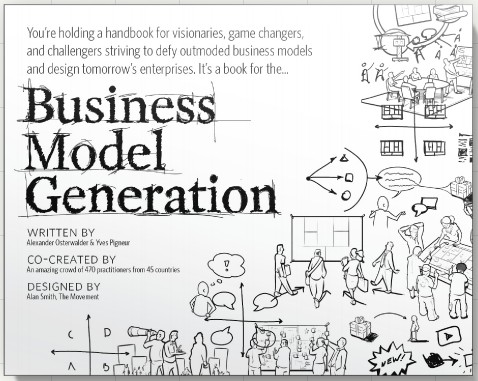
For entrepreneurs designing new ventures, corporate innovation teams working on business model transformation, MBA st…
Buy on Amazon →
Engineers, scientists, and researchers considering or early in the process of commercializing a technical innovation…
Buy on Amazon →
Small business owners — particularly those with five or more years of meaningful profitability — who want a CPA-ancho…
Buy on Amazon →
Tax professionals, policy analysts, and informed citizens who want to understand the structural case for replacing th…
Buy on Amazon →About Martin F J Prachowny
Read more from Martin F J Prachowny and explore the full bibliography on ClearValue Books.
View Martin F J Prachowny's page →Get an email if our take on The Kennedy-Johnson Tax Cut changes.
We re-review our picks. We'll email you if The Kennedy-Johnson Tax Cut's ranking or review changes — no checking back.

Ready to read The Kennedy-Johnson Tax Cut?
Buy the edition we recommend on Amazon.
Buy on Amazon →