

The Worlds First Stock Exchange

Curated by Brian Kim, CPA — every pick gets a plain-English summary and the key takeaways.
Brian Kim, CPA · 2.89M YouTube Subscribers →What this book actually teaches
- 01The Amsterdam Stock Exchange's seventeenth-century secondary market in VOC shares developed a complete toolkit of financial instruments — forward contracts, options, short selling, margin trading — that are still the structural foundation of modern equity markets.
- 02Petram's archival grounding in notarial records, court documents, and merchant correspondence — including Joseph de la Vega's 1688 Confusion de Confusiones, the earliest known description of stock market operations — gives the book a specificity that more impressionistic financial histories cannot match.
- 03The VOC's structure as a permanent joint-stock company (rather than a wind-up-at-voyage's-end venture) was the innovation that created the need for a secondary market — making the company's founding in 1602 the origin point of modern equity trading.
- 04Legal and regulatory responses to early financial instruments — unsuccessful attempts to ban short selling, court cases establishing forward contract enforceability — reveal the pattern of markets creating pressure for legal frameworks to evolve around them, a dynamic that repeats in every subsequent financial innovation cycle.
- 05The book is dense and rewards careful reading rather than skimming; the connection between seventeenth-century Amsterdam mechanics and modern market implications is present but underdrawn for readers expecting explicit parallels.
What's in this book
The World's First Stock Exchange (2014) by Lodewijk Petram is a financial history of the Amsterdam Stock Exchange in the seventeenth century — the first true secondary market for equity shares in history — examining how it emerged, how it functioned, and what financial instruments and trading practices developed there that still shape modern markets. Petram's thesis is that the Dutch invented not just the stock exchange but a surprisingly complete set of the financial technologies that modern investors take for granted: short selling, options, futures, margin trading, and market manipulation attempts.
The book's subject is the secondary market in shares of the Dutch East India Company (VOC), founded in 1602. The VOC was structured as a permanent joint-stock company — a significant innovation over earlier merchant ventures where investors expected return of capital at the voyage's end — which created the need for a secondary market where investors who wanted liquidity could sell their shares to investors who wanted to acquire them. Petram traces how this secondary market developed organically in Amsterdam's commercial district, with brokers, merchant bankers, and speculators creating the trading infrastructure and financial instruments that made it function.
Petram draws extensively on the primary sources — notarial records, court documents, merchant correspondence, and the writings of Joseph de la Vega, whose 1688 book Confusion de Confusiones is the earliest known description of stock market operations. This archival grounding makes the book's claims specific and verifiable rather than speculative, and it allows Petram to describe the mechanics of seventeenth-century stock trading with a precision that more impressionistic accounts cannot achieve.
The financial innovation content is one of the book's most interesting threads. Petram documents that forward contracts (agreements to buy or sell shares at a future date at a fixed price), options (the right to buy or sell at a fixed price), and short selling (borrowing shares to sell them with the expectation of buying them back cheaper) were all in use in Amsterdam by the early 1600s. The legal and regulatory responses to these instruments — attempts to ban short selling that largely failed, court cases establishing the enforceability of forward contracts — are also documented and reveal how markets create pressure for legal frameworks to evolve around them.
The weaknesses are about scope and pacing. The book is thorough on the mechanics of seventeenth-century Amsterdam trading but lighter on connecting those specific mechanisms to the broader question of why modern capital markets look the way they do. Readers who expect a direct line from Petram's archival detail to implications for modern investing may find the connection underdrawn. The narrative is also dense in places — it rewards careful reading but does not move at the pace of popular financial history.
For investors, historians, and finance professionals who want to understand where the mechanisms of modern capital markets came from — and who are willing to engage with detailed primary-source history — The World's First Stock Exchange is a rigorous and rewarding account.
Read next
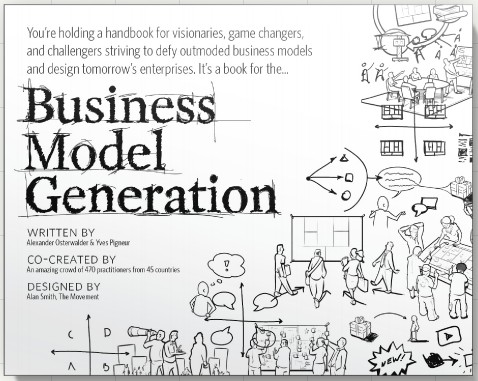
For entrepreneurs designing new ventures, corporate innovation teams working on business model transformation, MBA st…
Buy on Amazon →
Engineers, scientists, and researchers considering or early in the process of commercializing a technical innovation…
Buy on Amazon →
Small business owners — particularly those with five or more years of meaningful profitability — who want a CPA-ancho…
Buy on Amazon →
Tax professionals, policy analysts, and informed citizens who want to understand the structural case for replacing th…
Buy on Amazon →About Lodewijk Petram
Read more from Lodewijk Petram and explore the full bibliography on ClearValue Books.
View Lodewijk Petram's page →Get an email if our take on The Worlds First Stock Exchange changes.
We re-review our picks. We'll email you if The Worlds First Stock Exchange's ranking or review changes — no checking back.

Ready to read The Worlds First Stock Exchange?
Buy the edition we recommend on Amazon.
Buy on Amazon →