
Happy Money vs The Art of Money: Which Money-Emotion Book Goes Deeper.
Two books, one decision — which one belongs on your shelf.
Side by side
Anyone who earns enough to make discretionary spending choices but suspects their spending is not generating…

People who know what they should be doing financially but consistently avoid it — particularly those dealing…
What we're comparing
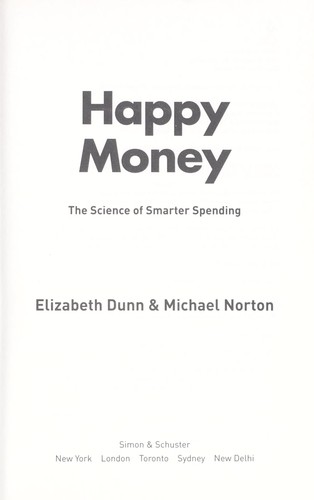
Elizabeth Dunn and Michael Norton's Happy Money is behavioral science applied to spending — five research-backed principles for buying more happiness per dollar. Bari Tessler's The Art of Money is a somatic and psychological approach to healing one's relationship with money — combining financial therapy, body-based practices, and bookkeeping as a form of self-knowledge. Both reject the spreadsheet-only approach to personal finance. But they serve very different readers: one is evidence-based and prescriptive; the other is introspective and therapeutic.
Best for — depends on the reader
Anyone who spends money habitually without feeling better, or who earns more without feeling proportionally happier. Best for middle-to-upper-income readers who have the financial basics sorted but want to optimize for life quality. Practical and concrete.
People with deep money wounds — financial anxiety, shame about debt or income, avoidance of financial tasks, or patterns inherited from family financial trauma. Best for readers in therapy or personal development contexts. The financial content is secondary to the emotional work.
Attribute by attribute
A check marks an objective capability a book offers (e.g. an audiobook edition). Publication year and length are shown as facts, not scored — newer or shorter isn't "better" for a classic. Confirm current editions on Amazon.
Dimension by dimension
Which one belongs on your shelf
“These books complement each other almost perfectly because they work at different layers of the same problem. Happy Money addresses the spending optimization layer — where to direct money for maximum life quality. The Art of Money addresses the emotional foundation layer — why you spend, avoid, hoard, or feel anxious about money in the first place. Read The Art of Money first if you have unresolved emotional patterns around money (most people do). Read Happy Money once the emotional layer is stable — it optimizes a working relationship with money, not a broken one.”
Common questions
Is Happy Money actually grounded in peer-reviewed research?
Yes — Dunn and Norton are behavioral scientists who conducted much of the underlying research. The five principles draw on their own published studies and a broader happiness economics literature. Some findings have faced replication scrutiny post-2013, but the core spending-happiness relationships have held across multiple independent studies.
Is The Art of Money appropriate if I'm not in therapy?
Yes, though the somatic practices are more accessible with some prior exposure to mindfulness or body-based work. Tessler designed it as a self-guided process — the book includes exercises, journaling prompts, and practices that don't require a therapist to work through.
Does "buy experiences over things" really hold across all income levels?
The experience-versus-things finding is most robust for middle and upper-income consumers who already have their basic material needs met. At lower income levels, purchasing things that improve daily living (better tools, more comfortable furniture, reliable transportation) can produce higher happiness than equivalent experiential spending.