
Rich Dad Poor Dad vs The Millionaire Next Door: Which Money Mindset Wins.
Two books, one decision — which one belongs on your shelf.
Side by side

For anyone whose financial education was "get a good job and save" — the book is most valuable for first-time…
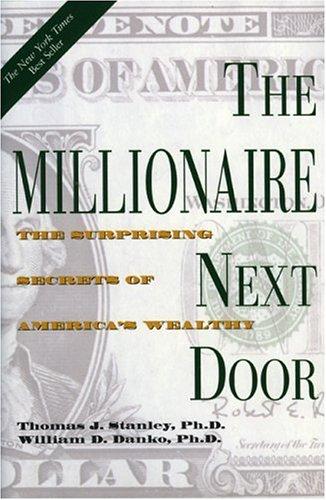
For anyone who confuses high income with wealth, or who feels behind because their lifestyle doesn't look…
What we're comparing
Two of the most-recommended money mindset books in print, written 1 year apart but built on opposite frameworks. Kiyosaki's Rich Dad Poor Dad says wealth comes from ACQUIRING income-producing assets aggressively. Stanley's Millionaire Next Door says wealth comes from RESTRAINT — living below your income for decades. Both are correct in different ways. The honest answer is: read them in the right order.
Best for — depends on the reader
Best for someone who thinks 'getting rich' = 'making a higher salary' — Kiyosaki cracks that frame and shows you ownership is the path. Effective for younger readers in their 20s.
Best for someone whose income is high but net worth is low — i.e. high-earning professionals (doctors, lawyers, executives) who feel like they should be wealthier than they are. Recalibrates the model of 'what wealthy looks like.'
Attribute by attribute
A check marks an objective capability a book offers (e.g. an audiobook edition). Publication year and length are shown as facts, not scored — newer or shorter isn't "better" for a classic. Confirm current editions on Amazon.
Dimension by dimension
Which one belongs on your shelf
“Read Rich Dad Poor Dad FIRST (mindset shift — wealth = ownership, not salary), then The Millionaire Next Door SECOND (execution — the unglamorous discipline that compounds the ownership). Both books in the right order = full picture. Either book alone misses half the lesson. Skip Kiyosaki's recent media entirely; the original book is still useful, but his current public commentary is not.”
Common questions
Which one should I read first if I can only read one?
If your problem is 'I'm earning fine but staying broke,' read The Millionaire Next Door — Stanley's restraint framework is the bigger lever for you. If your problem is 'I'm working hard but not getting ahead,' read Rich Dad Poor Dad — Kiyosaki's ownership reframe is the bigger lever. Most readers need both eventually.
Don't they contradict each other?
Less than it appears. Kiyosaki says BUY assets aggressively. Stanley says SAVE aggressively to fund the buying. They're describing different stages of the same process: Stanley tells you how to ACCUMULATE the capital; Kiyosaki tells you what to DO with it once you have it. Both are right.
Are either of these still relevant in 2026?
The principles are. The specifics aren't. Both books reflect 1990s conditions — Stanley's housing-cost math doesn't work in modern coastal cities; Kiyosaki's real-estate tactics don't transfer to current lending. Use the frameworks, ignore the era-specific examples, pair with a modern source like Psychology of Money for behavioral grounding.