
The Millionaire Next Door vs Stop Acting Rich: Same Author, Two Decades Apart.
Two books, one decision — which one belongs on your shelf.
Side by side
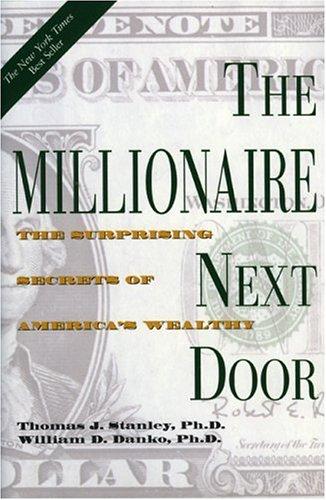
For anyone who confuses high income with wealth, or who feels behind because their lifestyle doesn't look…

High-income earners who are not building net worth at the rate their income should allow, and anyone who…
What we're comparing
Thomas Stanley co-wrote The Millionaire Next Door in 1996 and then wrote Stop Acting Rich in 2009. Both books draw on his decades of research into actual millionaire behavior, but they address different audiences and different problems. The Millionaire Next Door profiles how ordinary people build extraordinary net worth through discipline and frugality. Stop Acting Rich directly confronts the status consumption trap — the tendency to imitate the appearance of wealth rather than build it. Reading both Stanley books in sequence gives you his full research arc over 13 years of continued millionaire study.
Best for — depends on the reader
Anyone who assumes millionaires live in mansions and drive luxury cars. Stanley demolishes that assumption with survey data showing median American millionaires are quietly frugal, often self-employed, and invisible by appearance.
High-earning professionals who earn like millionaires but don't have millionaire net worth because status spending consumes the gap. Specifically addresses doctors, lawyers, and executives caught in prestige consumption cycles.
Attribute by attribute
A check marks an objective capability a book offers (e.g. an audiobook edition). Publication year and length are shown as facts, not scored — newer or shorter isn't "better" for a classic. Confirm current editions on Amazon.
Dimension by dimension
Which one belongs on your shelf
“Read The Millionaire Next Door first to understand who actually has wealth and how they got there — Stanley's original research is foundational. Then read Stop Acting Rich as the sharpened application: if you recognized yourself in The Millionaire Next Door as a UAW, Stop Acting Rich gives you the specific behavioral audit to fix it. Both books share the same message — stealth wealth beats conspicuous consumption — but Stop Acting Rich delivers it with more precision and less tolerance for excuse-making. For someone already past the mindset shift, Stop Acting Rich may be the more efficient read.”
Common questions
Do I need to read both if I've already read The Millionaire Next Door?
Stop Acting Rich adds meaningful new data and a sharper behavioral focus, so yes, if you found The Millionaire Next Door compelling. If you took The Millionaire Next Door's lessons seriously and implemented them, Stop Acting Rich confirms you're on the right track without dramatically shifting the framework.
Is the PAW formula still valid with today's cost of living?
The formula is a benchmark, not an absolute. In high cost-of-living cities, reaching the PAW threshold requires adjustments — Stanley's benchmarks were built on national median data. The underlying principle (net worth growth should outpace income growth) remains sound.
Does Stanley give advice on how to invest, or just what not to spend?
Both books focus heavily on spending behavior rather than investment selection. For what to do with the money you save, pair Stanley with a low-cost index fund book like The Little Book of Common Sense Investing — Stanley shows you the behavioral side, Bogle shows you the allocation side.