

Stop Acting Rich

Curated by Brian Kim, CPA — every pick gets a plain-English summary and the key takeaways.
Brian Kim, CPA · 2.89M YouTube Subscribers →What this book actually teaches
- 01The households that convert income into wealth drive non-prestige vehicles; vehicle choice is one of the strongest behavioral predictors of net worth accumulation.
- 02Luxury goods marketed to wealth aspirants are disproportionately purchased by high-income but low-net-worth households — the signal and the reality are inverted.
- 03Buying in the most expensive neighborhood you can afford creates social pressure to maintain consumption levels that drain the savings rate needed to build assets.
- 04The modal millionaire in Stanley's data is statistically unremarkable in appearance — high-net-worth and high-consumption are negatively correlated, not positively.
- 05Income-affluent and wealth-affluent are distinct populations; most financial marketing targets the former while the latter quietly accumulates without status display.
What's in this book
Stop Acting Rich by Thomas J. Stanley — who also wrote The Millionaire Next Door — extends the core thesis of that earlier book with a sharper argument: most people who look wealthy are not, and most people who are wealthy do not look it. The book's central claim is that conspicuous consumption — luxury cars, prestige watches, expensive wine — is primarily a behavior of the income-affluent, not the wealth-affluent, and that confusing the two categories is the primary mechanism by which people who could become wealthy instead remain income-dependent.
Stanley's methodology is survey-based. He draws on decades of data collection on the financial behaviors, asset levels, and consumption patterns of millionaires to show that the modal millionaire drives a non-luxury domestic vehicle, drinks beer rather than premium spirits, and does not wear a luxury watch. The disconnect between the cultural image of wealth (luxury goods, status display) and the statistical reality of wealth (high savings rate, low consumption relative to income, business ownership) is the book's engine.
The most useful empirical chapter concerns the car decision. Stanley documents that vehicle choice is one of the highest-correlation predictors of whether a high-income household will become a high-net-worth household. The households that convert income into wealth tend to buy used vehicles or non-prestige new vehicles; the households that stay income-dependent regardless of earnings tend to allocate a high percentage of their take-home to vehicle payments and maintenance. The chapter makes a case for the car decision as a proxy for the underlying consumption philosophy rather than just an isolated financial choice.
The premium spirits and luxury goods chapters make the same structural argument with different product categories: the consumers of Johnnie Walker Blue and Rolex watches are disproportionately high-income but not high-net-worth. The people who have the most money are not the biggest customers of the products marketed to signal money. Stanley frames this as a trap — the products marketed to wealth aspirants are, by design, most attractive to people who have income but not yet capital, which keeps them income-dependent.
The housing chapter is careful. Stanley does not argue against homeownership, but he does argue against buying in the most expensive neighborhood you can afford — a conventional piece of advice that he shows correlates with higher pressure to maintain consumption levels that match the neighborhood social norm, which drains the savings rate that would otherwise build wealth.
Who this is for: high-income earners who feel like they are making good money but not building assets, and anyone who has noticed that their consumption levels rise automatically with their income without a conscious decision to let them do so.
Weaknesses
the survey methodology produces correlations, not mechanisms — Stanley can show that millionaires drink beer at higher rates than premium spirits, but the book sometimes implies causality where the data supports only association. The advice can drift toward aesthetic prescriptivism (don't buy luxury goods) without adequately addressing that some luxury purchases are rational for high-net-worth households that have already built assets. The framing can read as moralistic against consumption in ways that conflate frugality with virtue rather than strategy.
Verdict
a data-grounded argument that the consumption behaviors marketed as wealth signals are actually wealth traps — worth reading for any high-income earner who is not yet accumulating assets at the rate their income suggests they should be.
Read next

For anyone whose financial education was "get a good job and save" — the book is most valuable for first-time readers…
Buy on Amazon →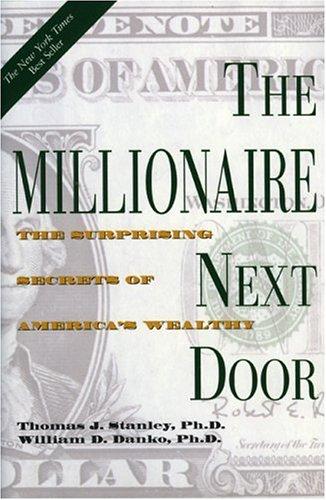
For anyone who confuses high income with wealth, or who feels behind because their lifestyle doesn't look like the we…
Buy on Amazon →
Anyone who earns enough to make discretionary spending choices but suspects their spending is not generating proporti…
Buy on Amazon →
Households in active consumer-debt distress who need a non-negotiable shared script. Not for investors already past B…
Buy on Amazon →How Stop Acting Rich stacks up
About Thomas J Stanley
Read more from Thomas J Stanley and explore the full bibliography on ClearValue Books.
View Thomas J Stanley's page →Get an email if our take on Stop Acting Rich changes.
We re-review our picks. We'll email you if Stop Acting Rich's ranking or review changes — no checking back.
