
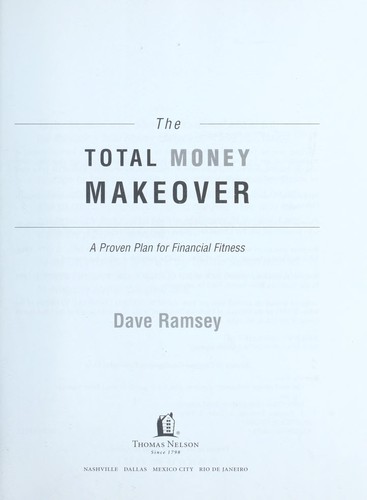
The Total Money Makeover vs Debt Free for Life: Best Debt Payoff System.
Two books, one decision — which one belongs on your shelf.
Side by side
Households in active consumer-debt distress who need a non-negotiable shared script. Not for investors…
People managing multiple consumer debts who want a sequencing system and negotiation tactics, not motivation.…
What we're comparing
Dave Ramsey's The Total Money Makeover is the most recognized debt-elimination system in America — 7 Baby Steps, no exceptions, debt snowball method, gazelle intensity. David Bach's Debt Free for Life offers a more measured, systems-driven approach built around the DOLP (Debt on Last Payment) method and behavioral automation. Both aim at the same finish line but use different psychology and tactics to get you there. Your personality type is the deciding factor.
Best for — depends on the reader
Someone in serious debt who needs a complete behavioral overhaul. Works best for readers who respond to urgency and moral clarity. The "gazelle intensity" framing works for people who need fire under them, not just a spreadsheet.
Someone with moderate debt who is already behaviorally stable and wants the most efficient mathematical payoff path. Works best for people who are disciplined but want better system design around their existing habits.
Attribute by attribute
A check marks an objective capability a book offers (e.g. an audiobook edition). Publication year and length are shown as facts, not scored — newer or shorter isn't "better" for a classic. Confirm current editions on Amazon.
Dimension by dimension
Which one belongs on your shelf
“The Total Money Makeover wins for readers in crisis or those who've failed at debt payoff before and need a total behavioral reset. The system's rigidity is a feature, not a bug, for that audience. Debt Free for Life wins for readers who are already stable and want a more mathematically efficient, less emotionally charged system. Both work — the right book is the one you'll actually finish and execute on. If you're unsure which you are, start with Ramsey: the intensity forces a decision, and most readers know within the first few chapters whether it fits.”
Common questions
Should I use the debt snowball or avalanche method?
The research consistently shows snowball (smallest balance first) produces better outcomes for most people because of the motivational wins. Avalanche (highest interest first) is mathematically optimal but behaviorally fragile. If you're extremely disciplined and your debts are close in balance size, avalanche works. Otherwise, snowball.
Is The Total Money Makeover too religious for non-religious readers?
The 2013 and later editions have reduced the explicit religious framing. The underlying system is secular — it's a behavioral debt-elimination protocol. Non-religious readers report finding the core system useful while skipping the faith-based framing.
Can I use both systems together?
Yes — use Ramsey's sequencing and urgency, and Bach's automation infrastructure. Automate minimum payments (Bach), attack the smallest debt with everything you have (Ramsey), and don't add any new debt (both). The systems are complementary.